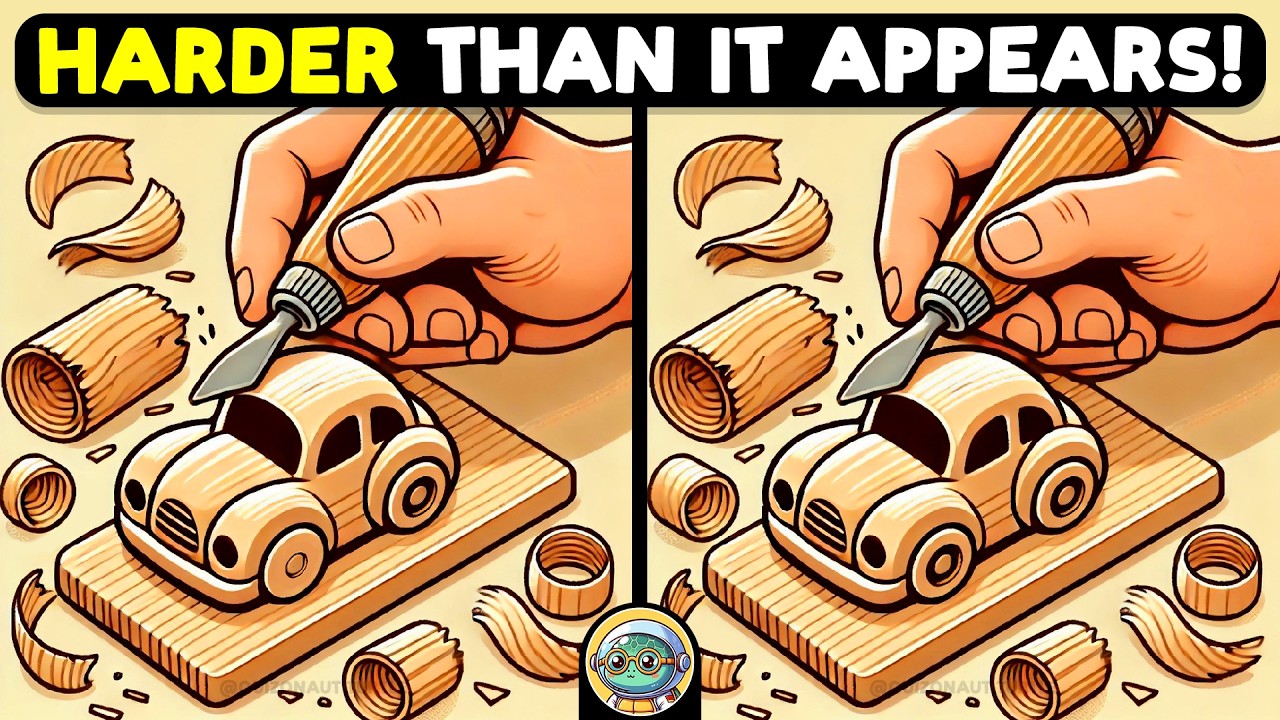
Spot-the-difference puzzles are some of the most loved brain teasers across the world. They look deceptively simple—two nearly identical images placed side by side, with just a few subtle differences hidden between them. But once you dive in, you realize it’s far trickier than expected. That’s exactly the case with the puzzle above, which boldly states: “Harder Than It Appears!”
At first glance, both images show the same scene: a hand carefully carving a wooden toy car with a chisel. Wood shavings scatter around the car, adding texture and realism. But don’t let the similarities fool you—there are hidden differences waiting to be found.
In this article, we’ll break down the puzzle, identify the differences, explain why it’s so challenging, discuss the psychology behind such games, and highlight the benefits of engaging with them.
First Impression of the Puzzle
The artwork depicts a calming and creative moment—someone carving a small wooden car out of a block. The details include:
- A hand gripping a carving tool.
- A rounded toy car with wheels and windows.
- Several wood curls and shavings scattered around.
- A rectangular wooden base under the car.
Both images appear nearly identical. But once you look carefully, subtle differences begin to reveal themselves.
The 3 Hidden Differences
Here’s a breakdown of the differences that make this puzzle tougher than it looks:
1. The Wooden Car Grill
Look closely at the front of the car.
- In the left image, the grill has three dark slots.
- In the right image, the grill has four slots.
This is a very subtle difference, yet it’s one of the trickiest because our brain tends to overlook small repetitive shapes.
2. The Wooden Shaving on the Right Side
Focus on the wood curls near the bottom right corner.
- In the left image, there’s a large circular curl lying flat.
- In the right image, that curl is replaced by a thin, wavy shaving.
Since both are similar in shape and color, many people miss this difference at first glance.

3. The Car’s Side Window
Check the car’s side window (on the door).
- In the left image, the window is smaller and higher.
- In the right image, the window is slightly larger and lower.
This is a clever design trick because our eyes naturally focus on the carving tool and the car’s overall body rather than its window proportions.
Why Is This Puzzle Harder Than It Appears?
The puzzle’s tagline is spot on—it really is harder than it first seems. Here’s why:
- Similarity Illusion: The two images are overwhelmingly identical at a glance. Subtle changes get lost in the flood of similarities.
- Distraction Elements: The wood shavings are scattered all over, creating visual clutter that distracts the eyes.
- Focus Bias: Our brains are naturally drawn to the hand and tool, ignoring small variations on the car or background.
- Detail Fatigue: After staring for a while, the eyes get tired, and the brain starts filling gaps, making it harder to detect differences.
That’s why puzzles like this can stump even the most observant people.
The Psychology Behind Spot-the-Difference Games
Spot-the-difference puzzles tap into deep psychological processes. Here’s what’s happening inside your brain while solving them:

- Pattern Recognition: Your brain scans for familiar shapes and patterns.
- Selective Attention: You filter out irrelevant details to focus on what matters.
- Memory Recall: You constantly compare details from one image with the other.
- Problem-Solving Skills: You strategize—sometimes scanning systematically, sometimes jumping to areas that feel suspicious.
This combination of visual and cognitive skills makes these puzzles both entertaining and mentally stimulating.
Benefits of Spot-the-Difference Puzzles
These puzzles are more than just a fun pastime—they’re a great mental workout. Some key benefits include:
- Enhances Observation Skills: You train yourself to spot even the smallest details.
- Boosts Concentration: Staying focused helps sharpen attention spans.
- Improves Visual Memory: Remembering details strengthens short-term memory.
- Promotes Relaxation: The slow, detailed nature of the puzzle is calming.
- Encourages Patience: These puzzles teach persistence and careful observation.
- Cross-Generational Fun: Perfect for children, adults, and seniors alike.
In fact, educators often use them with children to improve attention, while seniors use them to keep cognitive functions sharp.
Why People Love the “Harder Than It Appears” Challenge
Titles like this grab attention because they appeal to human curiosity and competitiveness. Here’s why they work so well:
- Ego Check: People want to prove the puzzle isn’t too hard for them.
- Sense of Accomplishment: Finding differences feels rewarding.
- Quick Fun: The challenge can be attempted in minutes.
- Shareable Nature: Perfect for social media—friends can compete to see who spots them first.
- Surprise Element: It really is harder than it looks, making the victory sweeter.
This mix of psychology and fun is why these puzzles keep going viral online.

Tips to Solve Spot-the-Difference Puzzles Faster
Want to become better at spotting differences? Try these strategies:
- Work Systematically: Start from one corner and move across.
- Compare Key Areas: Focus on common change spots like faces, clothing, or objects.
- Look for Shapes Over Colors: Designers often tweak shapes slightly instead of colors.
- Use Peripheral Vision: Sometimes differences pop out when you don’t stare directly.
- Take Breaks: Fresh eyes notice things tired eyes miss.
- Practice Regularly: The more puzzles you do, the sharper your skills become.
Over time, you’ll find yourself spotting changes faster and with more accuracy.
The Timeless Appeal of Spot-the-Difference Games
These puzzles have been around for decades, appearing in newspapers, puzzle books, and now digital platforms. Despite modern video games and advanced entertainment, they remain popular because:
- They’re easy to understand with no rules needed.
- They’re universally appealing across all age groups.
- They’re visually satisfying and engaging.
- They provide a quick dopamine hit when solved.
They’re simple yet endlessly entertaining, which is why they’re still a favorite worldwide.
Final Thoughts
This wood-carving puzzle is a perfect example of how something so simple can be so challenging. The three differences—the car’s grill slots, the wood shaving change, and the window size adjustment—are cleverly hidden, making it truly harder than it appears.

If you managed to find all three differences quickly, congratulations—you’ve got sharp eyes and excellent attention to detail. If you struggled, don’t worry. Every puzzle you attempt improves your skills, patience, and observation.
So the next time you see a challenge that claims it’s “harder than it looks,” don’t scroll past. Take the test, sharpen your mind, and enjoy the thrill of discovery. Because in the end, it’s not just about finding differences—it’s about training your brain to see the world more clearly.
Leave a Reply