“Spot the Difference” puzzles have a unique charm that makes them universally appealing. They are simple, fun, and deceptively tricky. What looks like two identical pictures at first glance often contains subtle differences waiting to be uncovered. These puzzles are not only entertaining but also a great way to exercise your brain and sharpen observational skills.
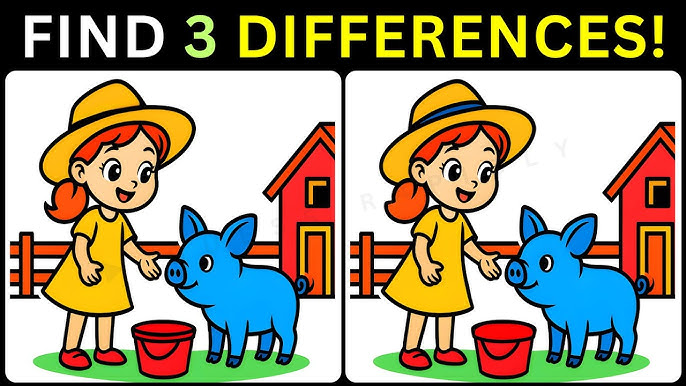
In the image above, we are presented with a delightful farmyard scene. A cheerful little girl wearing a yellow dress and sunhat stands next to a bright blue pig. At their feet is a red bucket, and in the background, you can see a barn and wooden fence. At first, both pictures look the same, but three clever changes have been hidden within.
Your challenge: Can you find all three differences?
Let’s take a closer look at the scene, break down the differences, and also explore why puzzles like these are so beneficial for both children and adults.
The Puzzle Scene: A Bright and Playful Farmyard
The illustration captures a wholesome, almost storybook-like moment on the farm. A smiling little girl interacts with a friendly pig. The artwork uses bold outlines, bright colors, and simple shapes, making it visually appealing and inviting to solve.

Key elements of the scene include:
- A girl in a yellow dress, red shoes, and a wide-brimmed yellow hat.
- A blue pig, which adds a playful twist since pigs aren’t blue in real life, making the artwork imaginative and fun.
- A red bucket placed on the ground between the girl and the pig.
- A red barn in the background, along with a wooden fence completing the farm setting.
The puzzle seems straightforward, but once you start comparing the two images side by side, the challenge reveals itself.
The Three Hidden Differences
Here are the subtle changes that make this puzzle tricky yet satisfying to solve:
1. The Girl’s Hat Decoration
Look carefully at the girl’s hat. In the first image, her hatband is plain yellow. But in the second image, the hat has a blue band, making the design slightly different. This tiny color change is easy to miss because the hat blends into the overall brightness of the picture.
2. The Pig’s Tail
Take a closer look at the pig’s tail. In the first image, the pig has a small curly tail visible at the back. In the second image, however, the tail is missing entirely. Since the pig is brightly colored and attracts most of the attention, spotting this change requires paying attention to small body details.

3. The Red Bucket’s Position
At first glance, the bucket looks the same. But notice the placement on the ground. In the first image, the bucket is directly under the girl’s hand. In the second image, it is slightly shifted closer to the pig. This difference is subtle because the bucket’s color and shape remain unchanged, but the positioning is just different enough to test your sharpness.
These three changes – the hatband color, the missing tail, and the bucket’s shifted position – make the puzzle an engaging challenge.
Why Spot the Difference Puzzles Work So Well
These puzzles may look simple, but they are carefully designed to stimulate the brain and challenge our natural tendencies to overlook small details. Here’s why they are so effective:
- Our Brains Seek Patterns
Humans are naturally wired to look for patterns. When two images look nearly identical, the brain initially assumes they are the same, forcing you to focus harder to spot differences. - They Test Attention to Detail
These puzzles demand precision. Even the tiniest difference – like a missing line, altered color, or shifted object – matters. This strengthens visual processing skills. - Balance Between Fun and Challenge
The puzzle is simple enough not to overwhelm you, but tricky enough to make the solving process rewarding. That balance keeps players engaged.
The Benefits of Playing Spot the Difference
Beyond being an entertaining pastime, “Spot the Difference” puzzles provide several cognitive and emotional benefits:
1. Enhances Concentration
Solving these puzzles requires sustained focus. This trains your brain to ignore distractions and concentrate on details, improving overall attentiveness.

2. Boosts Memory
When comparing two images, you often rely on short-term memory to recall details from one picture and cross-check them against the other. This strengthens memory skills.
3. Encourages Patience and Perseverance
Differences are not always obvious. Players must take their time, developing patience and persistence in problem-solving.
4. Improves Visual Perception
Spotting subtle variations improves your ability to notice details in your surroundings, an important skill in daily life.
5. Reduces Stress
These puzzles are light-hearted and playful. They provide a quick mental break, helping to relax the mind while keeping it active.
6. Great for Children’s Development
For kids, these puzzles improve critical thinking, sharpen observation skills, and offer a fun way to develop cognitive abilities without feeling like “work.”

Tips for Spotting Differences Faster
If you often get stuck on these puzzles, here are a few strategies to help:
- Divide the image: Mentally split the picture into sections (top, middle, bottom) and compare systematically.
- Check the edges: Many differences hide at the outer edges of the image where people are less likely to focus.
- Look for patterns: Differences often involve color changes, missing objects, or altered positions.
- Compare backgrounds: Background details are common hiding spots for changes since players focus more on main characters.
- Practice often: Like any skill, observational ability improves with practice. The more puzzles you solve, the sharper your eyes become.
The Fun of Discovery
The true joy of “Spot the Difference” puzzles lies in the moment of discovery. That instant when you finally notice a hidden change is satisfying and rewarding. It creates a small rush of dopamine – the brain’s “feel-good” chemical – which explains why these puzzles are so addictive.
And because each puzzle only takes a few minutes, it’s easy to fit them into your daily routine for a quick dose of fun and mental exercise.
Spot the Difference in Everyday Life
Interestingly, the skills developed through puzzles like these have practical benefits in real life. For example:
- Detecting errors in written work or documents.
- Noticing subtle changes in your environment (like missing items).
- Paying attention to detail at work or school.
- Improving visual memory, which helps with tasks like driving or navigation.
By training your eyes and brain to notice small changes, you’re essentially sharpening your problem-solving and critical thinking abilities in the real world.

Conclusion
The “Find 3 Differences” puzzle with the girl and the pig on the farm is a simple yet delightful brain teaser. At first, both images look identical, but closer observation reveals the three hidden differences: the girl’s hatband color, the missing pig’s tail, and the shifted red bucket.
What makes puzzles like this so enjoyable is not just the challenge of finding differences, but also the mental benefits they bring. From improving concentration and memory to reducing stress and building patience, these puzzles are as enriching as they are entertaining.
So, the next time you encounter a “Spot the Difference” challenge, take a moment to really focus. Enjoy the process, celebrate each discovery, and remember – you’re not just playing, you’re training your brain while having fun!
Leave a Reply