There’s something magical about “Spot the Difference” puzzles. They are playful, colorful, and seemingly simple at first glance—but the moment you dive in, you realize how cleverly the differences are hidden. The challenge draws you in, your eyes scanning back and forth, your brain firing on all cylinders. And then, suddenly, you spot one difference—followed by another—and the thrill of discovery keeps you hooked.
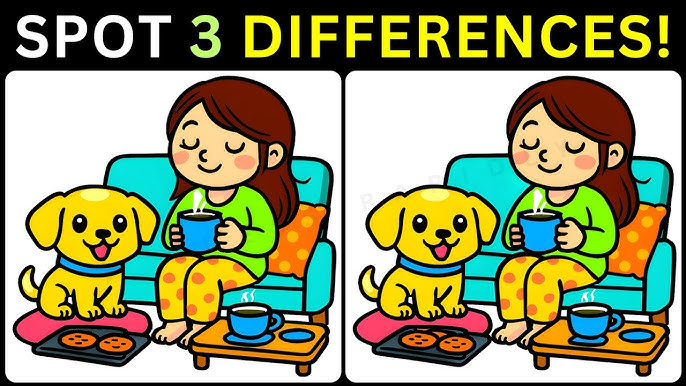
In today’s puzzle, we have a heartwarming scene of a young girl sitting with her adorable puppy in a cozy living room. A cup of hot drink, a plate of cookies, and a peaceful expression make this illustration both calming and fun to observe. But within this cheerful setting, the artist has hidden three subtle differences.
The question is: Can you find them all?
The Puzzle Scene: A Cozy Moment with a Cup and a Pup
The image captures a sweet, everyday scene that feels both comforting and relatable. A little girl, dressed in bright pajamas, is sitting on a turquoise sofa with an orange pillow. She’s holding a cup of what looks like tea, coffee, or hot chocolate. Beside her sits her cheerful yellow puppy, wagging its tail and smiling with wide eyes.
On the small coffee table in front of them, there’s another cup and a plate with cookies—perhaps an afternoon snack or a bedtime treat. The background is minimal, ensuring all focus remains on the girl, her pup, and their cozy setup.

The overall mood of the scene is warm, relaxing, and playful, making it the perfect setting for a spot-the-difference challenge.
The Three Hidden Differences
At first glance, the two images look exactly the same. But when you slow down and examine them carefully, you’ll spot three clever alterations. Here they are:
1. The Girl’s Pajamas
In the first image (left), the girl’s pajamas are plain yellow. In the second image (right), her pajamas feature orange polka dots. This difference is easy to miss if you’re focused on the dog or the table, but once you notice it, it becomes obvious.
2. The Puppy’s Tongue
Look closely at the adorable puppy. In the first image, the dog has its pink tongue sticking out happily. In the second image, however, the tongue is missing, giving the dog a slightly different expression. It’s a subtle but noticeable change that alters the puppy’s personality just a bit.
3. The Cookies on the Tray
On the floor beside the dog, there’s a tray with cookies. In the first image, the cookies have chocolate chips. In the second image, the cookies are plain, without the spots. This difference is small but clever, hidden in a part of the image that players may scan over quickly.

So, the three changes are: the pajamas with polka dots, the missing puppy tongue, and the altered cookies.
Why Spot the Difference Puzzles Are So Addictive
The charm of these puzzles lies in their simplicity and challenge combined. They draw you in with a colorful and cheerful scene, then hold your attention as your brain races to find the changes. Here’s why people of all ages love them:
- They’re Relaxing Yet Stimulating
These puzzles provide mental exercise without stress. You can sit back with a cup of tea and casually scan the images, enjoying the process. - They Trigger the “Aha!” Moment
Every time you spot a difference, you feel a rush of satisfaction. This little victory encourages you to keep going until you’ve found them all. - They Can Be Shared
Spot-the-difference challenges are great for groups. Families, friends, or classmates often compete to see who can find the differences first, making it a fun social activity. - They’re Timeless
From newspaper puzzle sections to digital apps, these games have remained popular for decades. The formula never gets old.
The Cognitive Benefits of Spot the Difference Games
Did you know that solving puzzles like this one is not just fun—it’s also beneficial for your brain? Here’s how:
1. Sharpens Observation Skills
These puzzles train your brain to notice details you might normally overlook. This skill translates to real-life tasks like proofreading, driving, or even spotting something out of place at home.
2. Enhances Concentration
To solve the puzzle, you need to stay focused and attentive. Over time, this practice improves your ability to concentrate for longer periods.

3. Boosts Memory
When comparing the two images, your short-term memory is constantly at work, helping you recall what you’ve already checked. This improves memory retention.
4. Encourages Patience and Persistence
Spotting differences isn’t always instant. It requires patience and persistence, which are valuable traits both for children and adults.
5. Reduces Stress
Engaging in playful activities like these can provide a mental break from stress. They offer a lighthearted escape while keeping your mind active.
Strategies to Solve Spot the Difference Puzzles
If you find these puzzles tricky, don’t worry! Here are some tips to help you:
- Divide the image into sections: Scan one part at a time (top to bottom or left to right) instead of looking at the whole picture at once.
- Look for small details: Focus on accessories, clothing, food, or background elements—artists often hide differences in these areas.
- Compare edges and corners: People often overlook corners, but small changes are frequently hidden there.
- Don’t rush: Slowing down helps you catch subtle alterations that quick glances might miss.
Why Kids Love These Puzzles
For children, puzzles like this one are more than entertainment—they’re educational tools. The bright colors and cartoonish drawings attract their attention, while the challenge of finding differences develops critical skills.

Kids benefit by:
- Improving hand-eye coordination.
- Building problem-solving abilities.
- Strengthening patience and focus.
- Gaining confidence with each successful discovery.
Real-Life Applications of Observation Skills
The skills gained from these puzzles are useful in everyday life. For example:
- Students can better spot mistakes in homework or projects.
- Professionals in fields like design, editing, and quality control rely on keen attention to detail.
- Drivers can notice hazards or changes on the road more quickly.
- Parents can spot changes in their child’s behavior or surroundings more easily.
In short, every time you solve a spot-the-difference puzzle, you’re exercising skills that matter in the real world.
Conclusion
The “Spot the 3 Differences” puzzle featuring a cozy scene with a girl, her puppy, cookies, and a warm drink is a wonderful blend of fun and mental exercise. The three differences—the girl’s polka-dotted pajamas, the missing puppy tongue, and the altered cookies—are cleverly hidden, making this challenge both entertaining and rewarding.
Beyond the immediate joy of solving the puzzle, games like these help sharpen observation, boost memory, and encourage patience. They’re simple yet powerful tools for learning, relaxation, and family fun.

So, grab a friend, take another look at the two images, and see who can spot all the differences first. Remember, every small discovery is a little victory worth celebrating!
Leave a Reply