Puzzle challenges have always been a source of entertainment, relaxation, and mental stimulation for people of all ages. Among the most popular formats is the “Spot the Difference” puzzle, where two similar-looking images are placed side by side with a few subtle alterations hidden in one of them. The task? To carefully observe and find the changes that often go unnoticed at first glance.
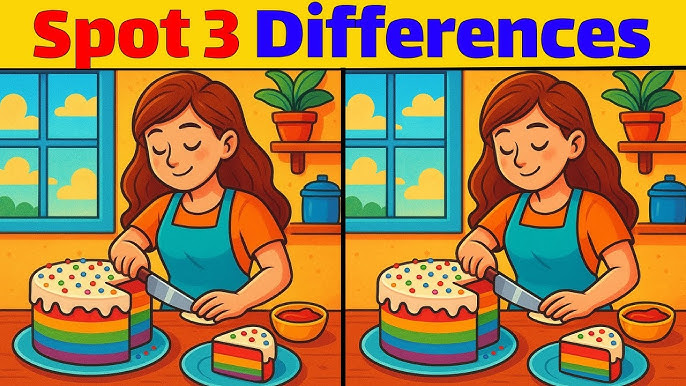
The image above is a “Spot the 3 Differences” challenge that features a girl joyfully cutting a colorful rainbow cake in her kitchen. At first glance, the two pictures look completely identical – the same girl, the same cake, and the same cozy background. However, a closer inspection reveals three clever differences hidden within the illustration. This test not only sharpens observation skills but also provides an exciting and fun way to exercise the brain.
In this article, we’ll explore the puzzle in detail, break down its hidden differences, discuss the benefits of solving such brain teasers, and even share tips on how you can improve your spotting skills.
The Puzzle at First Glance
The image shows a cheerful young girl with long brown hair, wearing an orange t-shirt and a blue apron, preparing to cut into a delicious rainbow cake. The scene is warm and vibrant, with a window showing a bright sky and potted plants in the background. A neatly cut slice of cake rests on a plate beside her, ready to be served.
Both images appear identical at first sight. This is what makes the puzzle so tricky – the brain tends to process the whole picture instead of analyzing each element individually. That’s why spotting the differences requires focused attention to detail and a sharp eye.
The Three Hidden Differences
Let’s reveal the hidden changes between the two images:

- The Cake Plate Design
In the first image, the cake is placed on a plate with a blue outline. In the second image, this outline is missing, making the plate look plain. It’s a subtle difference that most people overlook initially since the cake draws most of the attention. - The Wall Shelf Item
On the shelf in the background, there are two objects – a plant in a pot and a small blue container. In the first image, both are visible, but in the second image, the blue container is missing. This change blends into the background and is easy to miss. - The Cake Slice Sprinkles
On the plate with the cut slice of cake, sprinkles are visible in the first image. In the second image, however, the sprinkles on the cake slice are missing. Since our eyes are drawn to the large cake being cut, this difference often goes unnoticed.
These three cleverly hidden changes make this puzzle both engaging and challenging.
Why Spot the Difference Puzzles Are Beneficial
These puzzles are more than just fun – they provide several cognitive and mental benefits, making them a great pastime for children and adults alike.
- Enhances Attention to Detail
Spotting differences requires scanning an image thoroughly and comparing even the smallest details. This sharpens focus and strengthens observational skills. - Boosts Memory and Concentration
While comparing the two images, the brain constantly recalls visual details. This process strengthens short-term memory and helps improve concentration. - Encourages Patience and Persistence
These puzzles often take time to solve. They teach patience, persistence, and the importance of careful examination – valuable traits in problem-solving. - Reduces Stress and Promotes Relaxation
Engaging in light puzzles like these helps shift focus away from stress and provides a relaxing break, much like meditation. - Improves Cognitive Flexibility
Spotting differences requires looking at the same scene in multiple ways. This enhances cognitive flexibility – the ability to adapt and shift perspectives.
Tips for Spotting Differences Faster
If you find these puzzles tricky, don’t worry! Here are some tips to help you become better at spotting differences:

- Scan systematically: Instead of looking randomly, compare sections of the images one by one – top to bottom or left to right.
- Focus on colors and shapes: Small changes in colors, outlines, or missing shapes are often the key differences.
- Check the background carefully: While most focus on the main object, many changes are hidden in the background.
- Zoom in (if digital): On a screen, zooming in helps you spot tiny alterations you might otherwise miss.
- Practice regularly: Like any skill, observation improves with practice. The more puzzles you solve, the quicker you’ll get.
Why These Puzzles Are So Popular Online
Spot the Difference challenges have gained massive popularity across social media platforms, puzzle apps, and educational websites. Their appeal lies in the combination of simplicity and challenge. They require no prior knowledge, can be enjoyed by people of all ages, and provide instant satisfaction when the differences are spotted.
In fact, many online puzzle creators use these challenges to test IQ, attention span, and observation skills in a fun and interactive way. They are also widely used in classrooms for children to build concentration and attention to detail in an engaging manner.
The Joy of the “Aha!” Moment
One of the most enjoyable aspects of solving these puzzles is the moment of realization – the “Aha!” moment when your eyes finally catch a difference you’ve been struggling to find. This small victory releases dopamine in the brain, giving you a sense of achievement and motivation to solve more puzzles.

Conclusion
The cake-cutting “Spot 3 Differences” puzzle is a delightful and brain-stimulating challenge. It may look simple at first, but the cleverly hidden alterations test your observation, patience, and problem-solving skills. From the missing plate outline to the vanishing shelf container and the absent cake slice sprinkles, each difference adds a layer of challenge that keeps the mind engaged.
These puzzles are not only fun but also beneficial for mental agility, making them a perfect activity for both kids and adults. Whether you’re looking to relax, challenge yourself, or simply pass the time, “Spot the Difference” puzzles like this one are an excellent choice.
So, next time you come across one of these challenges, remember to take your time, stay observant, and most importantly – enjoy the process. After all, the real reward isn’t just finding the differences but the mental workout and satisfaction that comes with it.

Leave a Reply