Spot-the-difference puzzles have been a beloved pastime for generations, delighting both kids and adults alike. They are simple in concept yet surprisingly tricky in execution, making them a perfect way to test observation skills and attention to detail.
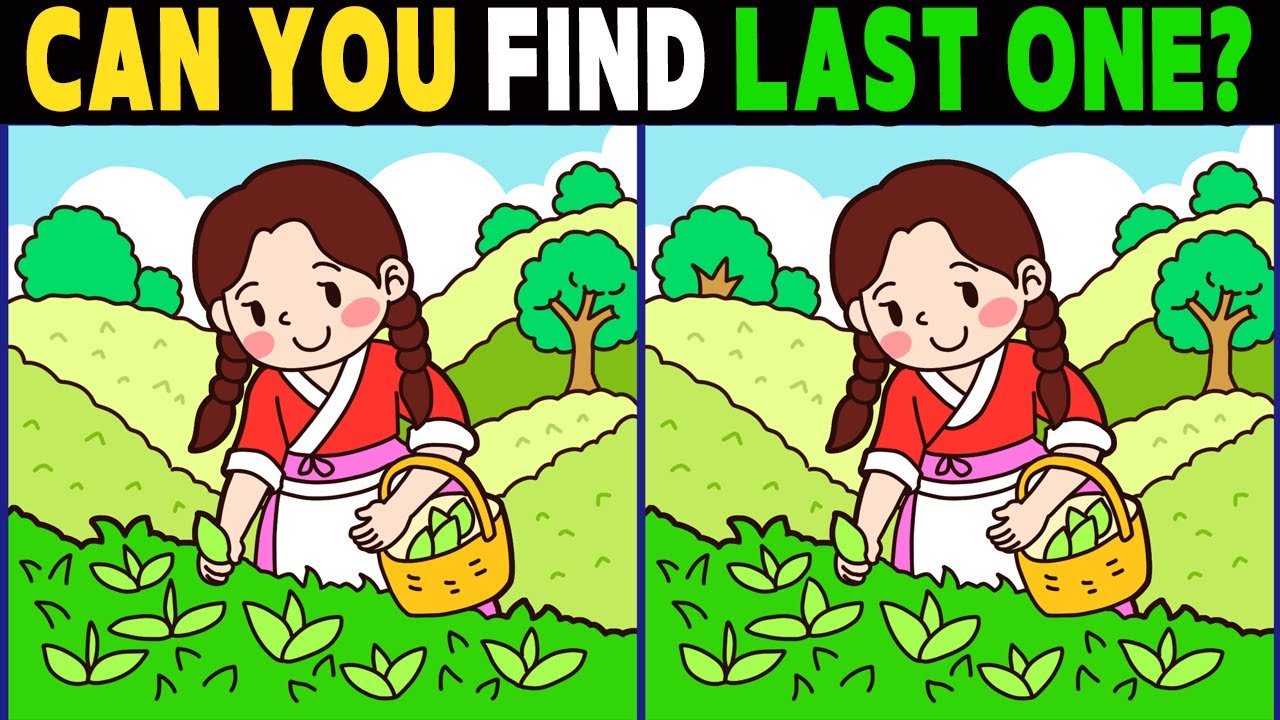
Today’s puzzle is a colorful and charming illustration of a young girl in a red dress, standing in a lush green field with a basket in her hand. At first glance, the two pictures look almost identical. But here’s the catch—there are differences hidden within the two images, and your task is to find them.
The question is: Can you find the last one?
The Puzzle Scene: A Girl in the Green Fields
The illustration sets a peaceful and playful mood. Here’s what we see:

- A smiling young girl with braids, dressed in a traditional red and white outfit.
- She is carrying a basket filled with green leaves, perhaps from picking plants in the field.
- The background is bright and fresh with green bushes, rolling hills, and trees.
- White fluffy clouds fill the sky, giving the scene a cartoonish, cheerful vibe.
It’s a wholesome setting, but the challenge is not to admire the beauty—it’s to sharpen your eyes and spot what’s different.
Spotting the Key Differences
Careful observation reveals that although the images look the same, they contain subtle differences designed to trick the eye. Let’s break them down.
1. The Tree Branch
- In the left image, the tree in the background has a Y-shaped branch visible.
- In the right image, the branch is missing, leaving the tree with just green foliage.
This is a background change—easy to miss if your attention is on the girl.
2. The Girl’s Waistband Ribbon
- In the left image, the girl has a purple ribbon tied around her waist.
- In the right image, the ribbon detail is missing, making her outfit slightly plainer.
Since this is on the girl’s clothing, it’s one of the first things many solvers spot.

3. The Leaves in the Basket
- In the left image, the basket contains more leaves, filling up the space.
- In the right image, the basket has fewer leaves, making it look less full.
This is the trickiest difference because our brains often overlook small internal details within objects.
So, the three differences are:
- Missing tree branch.
- Missing waistband ribbon.
- Fewer leaves in the basket.
Why This Puzzle Is Clever
What makes this puzzle interesting is the mix of foreground and background changes. Our natural instinct is to focus on the girl’s face and clothes, so spotting the missing ribbon might come quickly. But when it comes to the tree branch or the number of leaves in the basket, it takes much sharper observation.
The puzzle creators deliberately add differences in both obvious and subtle places, ensuring that your brain stays challenged.

The Psychology of Spot-the-Difference Games
Spot-the-difference puzzles are not just fun—they reveal fascinating insights into how the human brain works. Here’s why:
- Top-down processing: Our brains focus on the most important parts of a scene (faces, clothing) and ignore the background. That’s why changes in trees or clouds are harder to notice.
- Change blindness: Humans are surprisingly bad at noticing small alterations in images. This puzzle exploits that weakness.
- Reward system: Finding each difference triggers a small release of dopamine, the “feel-good” chemical in the brain. This makes us feel satisfied and motivates us to continue.
In short, these puzzles are like mini workouts for your brain.
Benefits of Solving These Puzzles
Engaging in spot-the-difference challenges offers several cognitive and emotional benefits:
- Improved Attention to Detail – Trains the brain to notice small variations in visual information.
- Enhanced Memory – Repeated observation strengthens both visual and working memory.
- Stress Relief – These puzzles are calming and engaging, making them a great break from daily stress.
- Boosted Patience and Focus – Teaches persistence and concentration, especially in kids.
- Family Fun – They are suitable for all ages and can be solved together, encouraging teamwork.
Tips to Solve Spot-the-Difference Faster
If you struggled with this puzzle, don’t worry—here are a few strategies to improve your skills:

- Divide the image into sections and scan systematically instead of looking randomly.
- Compare backgrounds carefully, as many differences are hidden in trees, clouds, or hills.
- Pay attention to clothing and accessories, since details like belts, ribbons, and shoes are common targets.
- Zoom in (if digital)—sometimes the small differences are only visible on closer inspection.
- Practice regularly, as the more puzzles you solve, the sharper your eyes become.
Why These Puzzles Appeal to All Ages
Spot-the-difference puzzles have a universal charm:
- Children love them for their colorful designs and as a fun way to develop problem-solving skills.
- Adults enjoy them as stress-busting brain teasers that also keep their observation sharp.
- Seniors use them as a memory-boosting exercise to maintain mental agility.
That’s why these puzzles never go out of style—they’re simple, accessible, and rewarding for everyone.
Real-Life Applications of Puzzle Skills
The observation skills honed through puzzles like this have real-world value:
- Editors and proofreaders use detail-oriented thinking to spot errors in text.
- Designers and engineers must notice small inconsistencies in visuals or structures.
- Doctors and nurses rely on sharp attention to notice subtle changes in symptoms or scans.
- Everyday life – from noticing lost keys to identifying traffic signs, strong observation skills help in countless small ways.
So, while it may seem like just a fun game, it’s actually training your brain for practical tasks.

Final Thoughts
This charming puzzle of the girl with a basket is not just a delightful scene but also a clever test of observation skills. The differences were:
- A missing tree branch.
- The girl’s waistband ribbon.
- The number of leaves in her basket.
If you spotted all of them, congratulations—you have sharp eyes and excellent attention to detail. If not, don’t worry—each puzzle you attempt helps train your brain to be more observant and attentive.
Remember, puzzles like these are more than just games—they’re mental workouts, stress relievers, and even tools for building patience. So the next time you see a spot-the-difference challenge, dive in with excitement. Who knows? With practice, you might become a master at spotting even the trickiest differences.
Leave a Reply