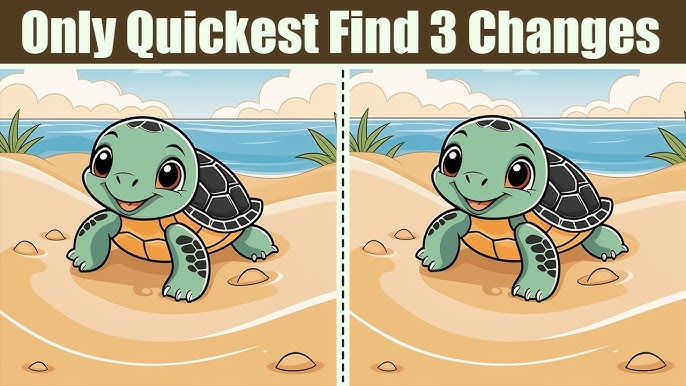
Spot-the-difference puzzles are classic brain teasers that test our observation skills, attention to detail, and patience. They look simple at first glance—two seemingly identical pictures placed side by side—but hidden within are subtle changes designed to challenge even the sharpest eyes. The puzzle above, titled “Only Quickest Find 3 Changes”, features a cheerful cartoon turtle crawling along a sandy beach, with the ocean waves and sky in the background.
While both images look the same at first, they actually contain three clever differences. The challenge? Only the quickest and most observant players can find them in record time. Let’s take a deep dive into this puzzle, reveal the hidden changes, and explore why exercises like these are not just fun but also great for the brain.
First Impressions of the Turtle Puzzle
The turtle is drawn in a bright and playful cartoon style. Its large, friendly eyes and happy smile make it instantly appealing, especially for children and puzzle enthusiasts. The setting is equally charming: a sandy beach with scattered rocks, a calm blue sea, and fluffy white clouds drifting across the sky.

This inviting scene sets the stage for a puzzle that feels simple yet tricky. The artist has carefully hidden three differences, balancing changes in the character and the background to keep solvers on their toes.
The Three Differences Revealed
Here’s a closer look at the three differences hidden between the two turtle images:
- The Turtle’s Front Foot
- In the left image, the turtle’s front right foot (our left) has a complete, full green shape with visible toes.
- In the right image, this same foot is slightly different—it has fewer toes drawn, giving the limb a slightly altered look.
- This is a character-focused change and often the first one people notice.
- The Rock on the Sand
- Look closely at the sandy area in front of the turtle.
- In the left picture, there are three visible rocks scattered on the sand.
- In the right picture, one of these rocks is missing, leaving only two.
- Small background edits like this are often overlooked at first, making this a clever difference.
- The Turtle’s Shell Pattern
- On the turtle’s back, the shell pattern is slightly altered.
- In the left image, the shell has a more detailed segment design.
- In the right image, one of the dark hexagonal segments is missing or drawn differently, changing the symmetry.
- Because the shell is a large, complex shape, this change hides in plain sight until you compare both carefully.
These three differences—the turtle’s foot, the missing rock, and the altered shell—may seem obvious once pointed out, but spotting them quickly requires a sharp eye. That’s why the puzzle is labeled “Only Quickest Find 3 Changes”.

The Brain Benefits of Spot-the-Difference Puzzles
Beyond their entertainment value, spot-the-difference puzzles offer remarkable benefits for the mind. Let’s explore why they are such a powerful brain workout:
- Improved Attention to Detail
Spotting small changes sharpens your ability to notice details in everyday life. This skill is especially valuable in tasks that require accuracy, such as editing, design, or even safety checks. - Enhanced Concentration
To find differences, you must focus deeply on both images. This strengthens your ability to concentrate, training your mind to resist distractions. - Memory Boost
Your short-term memory is engaged as you hold features of one image in your mind while comparing it to the other. Over time, this strengthens working memory. - Stress Relief
Immersing yourself in a puzzle provides a relaxing mental break, lowering stress levels and promoting mindfulness. - Visual Discrimination Skills
These puzzles improve how your brain processes visual input, teaching you to identify patterns, shapes, and anomalies faster.
How Puzzle Artists Hide Differences
Designing puzzles like this turtle scene requires careful thought. Artists aim to balance fun with challenge by making changes that are neither too obvious nor impossibly hard. They usually select three categories:
- Character Alterations – Changing a detail on the main subject (like the turtle’s foot or shell).
- Background Tweaks – Editing environmental details (like the missing rock).
- Symmetry Shifts – Altering patterns or shapes that our brain expects to be consistent (like the shell segments).
The result is a balanced puzzle where solvers are encouraged to explore both the main subject and the environment, ensuring the activity feels rewarding.

Why Spot-the-Difference Puzzles Remain Popular
From magazines and newspapers to mobile apps and online games, spot-the-difference puzzles have remained popular for generations. Here’s why:
- Universal Appeal – Both kids and adults enjoy them. Children find joy in the colorful artwork, while adults appreciate the nostalgic yet challenging gameplay.
- Quick Entertainment – Unlike lengthy puzzles, these can be solved in a few minutes, making them perfect for coffee breaks or commutes.
- Family Fun – Parents and kids can solve together, turning the puzzle into a bonding activity.
- Brain Training – They provide a playful yet productive way to keep the mind active, much like Sudoku or crosswords.
The turtle puzzle, with its beachy charm and friendly character, embodies this timeless appeal perfectly.
Tips for Solving Spot-the-Difference Puzzles Faster
Want to become one of the “quickest” solvers? Here are some pro tips:

- Start Systematically – Scan from top to bottom or left to right instead of darting your eyes randomly.
- Focus on Key Areas – Pay close attention to patterns, character outlines, and repeated elements.
- Check the Background – Many differences are hidden in objects like rocks, trees, or clouds.
- Use Short Breaks – If stuck, look away for a few seconds. A fresh glance often reveals what you missed.
- Practice Regularly – Like any skill, your observation sharpens the more you practice.
Beyond the Puzzle: Real-Life Applications
Observation skills trained through puzzles have real-world uses. Doctors, detectives, engineers, and editors rely on sharp eyes to catch details others might miss. Even in everyday life—like spotting road signs, finding misplaced items, or noticing subtle changes in your environment—this skill proves invaluable.
So while solving a beach turtle puzzle may seem like simple fun, it’s actually preparing your brain for sharper thinking and quicker responses in daily challenges.
Final Thoughts
The “Only Quickest Find 3 Changes” turtle puzzle is a delightful blend of art, fun, and mental challenge. By spotting the three differences—the altered foot, the missing rock, and the shell change—you not only complete the puzzle but also give your brain a refreshing workout.

These puzzles remind us that the smallest changes can make the biggest differences. With their universal appeal and cognitive benefits, spot-the-difference games will continue to entertain and challenge people across all ages.
So next time you see a puzzle like this, take the challenge. Be quick, be sharp, and enjoy the thrill of discovery. After all, it’s not just a game—it’s training your brain, one difference at a time.
Leave a Reply