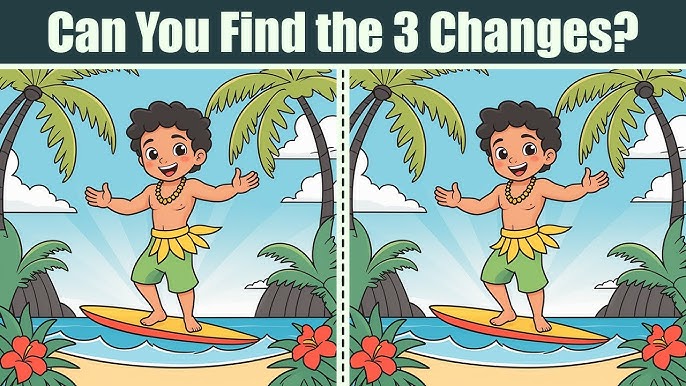
Spot-the-difference puzzles are more than just a delightful pastime—they are exercises in mindfulness, memory, and observation. They take us into colorful, playful worlds while simultaneously sharpening our focus. The puzzle presented here is a cheerful seaside scene: a young boy surfing happily in a tropical paradise, surrounded by palm trees, flowers, mountains, and the open sea.
The challenge is clear: “Can You Find the 3 Changes?” Though it may sound easy, the artist has cleverly hidden the differences in ways that test how observant you really are. Let’s break down the details of this puzzle, identify the three changes, and explore the many benefits these visual games provide.
First Glance: The Tropical Surf Scene
The illustration captures a joyful moment of a boy riding the waves on his surfboard. He is wearing a green grass skirt with a yellow belt and necklace, smiling widely with arms outstretched in excitement. Two palm trees frame the scene, tropical flowers bloom at the front, and rocky mountains rise in the distance. White clouds float in the sky, completing the lively island setting.
At first glance, both images appear identical. But as with every “Spot the Difference” game, the fun lies in looking closer. The smallest changes can make a big difference.

The 3 Changes Revealed
After a careful comparison, here are the three differences between the two surfing images:
- The Boy’s Surfboard Color
- In the left image, the surfboard has red stripes on it.
- In the right image, the surfboard is a plain orange color with the red detail missing.
This difference is clever because our eyes are drawn to the boy’s face, not the surfboard.
- The Necklace Around the Boy’s Neck
- On the left image, the boy is wearing a brown bead necklace.
- On the right image, the necklace is missing entirely, giving him a slightly different look.
Since the necklace blends with his skin tone, this difference is easily overlooked.
- The Flower at the Bottom Right
- In the left image, there are two bright red flowers in the bottom right corner.
- In the right image, only one red flower is present—the second one has disappeared.
This change is subtle but stands out once noticed, as the flowers are part of the scene’s balance.
Together, these three changes—the surfboard design, the necklace, and the missing flower—complete the challenge.
Why Spot the Difference Games Are Beneficial
While they may appear to be simple fun, these puzzles carry many benefits for mental development and overall brain health. Let’s explore some of the most significant advantages:
1. Sharpening Observation Skills
The core of these puzzles lies in noticing subtle details. Training your brain to catch small differences improves overall attentiveness in daily life, from reading contracts carefully to spotting changes in your environment.

2. Boosting Concentration
Focusing on two nearly identical images requires uninterrupted attention. This practice strengthens the ability to concentrate, which is especially valuable in today’s world of constant distractions.
3. Memory Enhancement
While switching your gaze between the two images, your brain stores tiny details in short-term memory to compare them effectively. Over time, this strengthens memory capacity and recall speed.
4. Stress Relief
Engaging in puzzles shifts your focus away from stress and immerses you in a calming activity. The joy of solving and the sense of accomplishment provide a boost of relaxation and satisfaction.
5. Inclusive Fun for All Ages
From young children building focus skills to adults keeping their brains sharp, spot-the-difference games are universally beneficial and enjoyable.

Strategies for Solving Spot the Difference Puzzles
If you find these puzzles tricky, don’t worry—there are strategies you can use to make them easier:
- Start from the background: Many differences are hidden in the sky, clouds, or scenery.
- Compare character details: Pay attention to clothes, accessories, and facial features.
- Count repeated elements: Flowers, clouds, spots, or stripes are often modified.
- Work systematically: Scan from top to bottom instead of randomly jumping around.
- Take short breaks: A quick pause can refresh your eyes and reveal differences you missed before.
The Artistic Appeal of This Puzzle
The surfing puzzle is not only mentally stimulating but also visually delightful. Let’s break down some of the artistry:
- Vibrant Colors: The bright greens of the palm leaves, the red flowers, and the golden surfboard create a tropical paradise.
- Cheerful Expression: The boy’s wide smile and open arms exude joy and adventure.
- Balanced Composition: Palm trees frame the image while flowers and mountains complete the tropical feel, making the puzzle lively and engaging.
- Clever Design Choices: By hiding changes in everyday elements like accessories, stripes, and flowers, the artist ensures that players must truly focus.
Why Do People Love Spot the Difference Games?
These puzzles have remained popular for generations, appearing in newspapers, magazines, children’s activity books, and now digital platforms. Their enduring charm lies in a combination of factors:
- Simplicity: Easy to understand—anyone can play.
- Challenge: Though simple in concept, finding differences requires patience and sharp eyes.
- Universality: They transcend language and culture; visual puzzles are understood everywhere.
- Satisfaction: Each found difference delivers a small burst of dopamine, making the brain crave more.
Life Lessons from Spot the Difference
Surprisingly, these puzzles hold lessons that extend beyond entertainment. Life, like these games, often hides its important details in small places. Noticing the little things—whether in relationships, work, or daily tasks—can make a significant difference. Just as a missing flower or stripe changes the puzzle, small changes in life can alter outcomes dramatically.

Conclusion: Riding the Waves of Fun and Focus
The surfing puzzle challenges us to spot three changes in a lively tropical setting. The missing surfboard stripes, the absent necklace, and the vanished flower test our attention in clever ways. Beyond the fun, such puzzles strengthen observation, focus, memory, and patience. They also provide joy, relaxation, and a sense of accomplishment.
Ultimately, puzzles like this are more than games—they are exercises in awareness, art appreciation, and mindfulness. By engaging with them, we not only entertain ourselves but also nurture sharper minds.
So, the next time you’re challenged to “find the 3 changes,” remember: It’s not just about solving a puzzle—it’s about training your brain to notice the details that truly matter, both in images and in life.

Leave a Reply