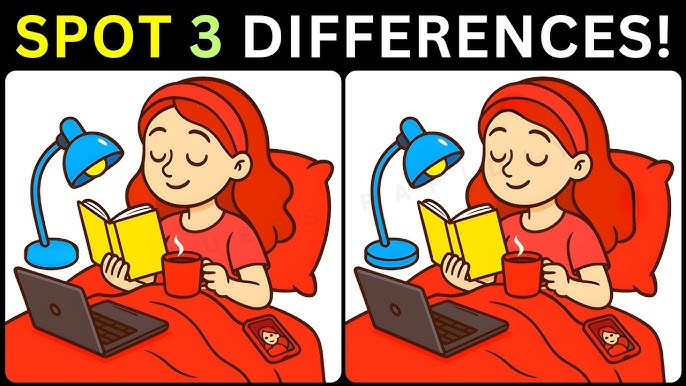
There’s something comforting about curling up in bed with a good book, a warm drink, and soft light illuminating the room. The image above captures exactly that feeling—but with a twist. This isn’t just a cozy bedtime scene; it’s also a spot-the-difference puzzle designed to test your observation skills.
At first glance, both pictures look the same. A girl with flowing red hair is tucked under a blanket, reading a yellow book while holding a steaming cup in her hand. A blue lamp shines on her, a laptop sits nearby, and a small teddy bear image decorates the blanket. But if you look carefully, you’ll discover that three sneaky differences are hidden between the two images.
Spot-the-difference puzzles like this one are more than just lighthearted fun. They challenge your brain, sharpen your focus, and provide a moment of mindful relaxation in your busy day. Let’s explore the hidden changes in this particular puzzle, discuss why these games are so beloved across generations, and uncover the surprising mental benefits they bring.
The Scene: Reading in Comfort
The illustration paints a peaceful picture. The girl, with a red headband to match her blanket, is enjoying a quiet moment with her book. On the bedside sits her laptop, perhaps suggesting she has just finished some work or study. In her other hand, she holds a hot drink, the steam rising lazily into the air. At her feet, we see a small cartoon teddy bear patch on the blanket—a sweet touch that makes the scene even warmer.
This sense of familiarity is part of what makes spot-the-difference puzzles so engaging. They take ordinary moments and add a playful challenge, inviting us to look closer at what might otherwise seem simple or routine.
The Three Hidden Differences
So, what exactly are the three changes hidden in this pair of images? Let’s take a closer look:
- The Lamp Shade
- In the left image, the lamp shade is solid blue.
- In the right image, the inside of the lamp shade is yellow, giving it a brighter, two-tone look.
- The Girl’s Sleeve
- On the left side, the girl’s red shirt has a short sleeve ending just above her elbow.
- On the right side, her sleeve is longer, covering more of her arm.
- The Teddy Bear on the Blanket
- In the left picture, the teddy bear image is clearly smiling, with open eyes.
- In the right picture, the teddy bear’s expression is different—its eyes are closed, giving it a sleepy look.
These small details can easily go unnoticed unless you carefully scan the entire picture. That’s the beauty of puzzles like this—they encourage us to slow down, observe deeply, and discover what our eyes might initially miss.
Why Spot-the-Difference Puzzles Are So Addictive
It’s no surprise that these puzzles remain popular across all age groups. Here’s why so many people love them:
- Simplicity: You don’t need any special tools or skills—just your eyes and a little patience.
- Instant Gratification: Every time you spot a difference, you feel a sense of accomplishment, no matter how small.
- Universal Appeal: Kids enjoy them for the challenge, while adults appreciate them as a quick and relaxing distraction.
- Playful Nostalgia: Many of us grew up solving these puzzles in magazines, activity books, or newspapers, and doing them today feels like reconnecting with a classic pastime.
Mental Benefits of Spot-the-Difference Puzzles
Beyond entertainment, games like this offer real cognitive benefits. Let’s break them down:
1. Sharper Observation Skills
Spotting small changes trains your eyes and brain to notice fine details. This skill can help in daily life, whether you’re proofreading a document, noticing changes in your surroundings, or paying closer attention during conversations.

2. Improved Concentration
Puzzles like these require focus. In a world filled with distractions, practicing concentration on a single task—even for just a few minutes—can strengthen your attention span.
3. Boosted Memory
When comparing the two images, your brain constantly recalls what you saw in one picture while checking against the other. This back-and-forth strengthens short-term memory.
4. Stress Relief
Engaging in a simple, low-pressure puzzle can provide a calming break. It redirects your mind from stress and allows you to enjoy a mindful, relaxing activity.
5. Problem-Solving Practice
Even though it’s just a visual game, spotting differences requires strategy, persistence, and logical thinking—all of which are valuable problem-solving skills.
Educational Value for Kids
For children, spot-the-difference puzzles are not just fun—they’re also educational tools. Parents and teachers often use them to:

- Develop visual perception and pattern recognition.
- Encourage patience and focus through quiet activity.
- Enhance hand-eye coordination when differences are circled or pointed out.
- Provide a fun alternative to screen-heavy games while still engaging the brain.
With colorful, relatable themes—like this cozy bedtime reading scene—kids are drawn to the puzzle without even realizing how much they’re learning.
Why Adults Love Them Too
While these puzzles are popular with children, adults can benefit just as much. In fact, many people turn to spot-the-difference challenges as a quick break during work hours. Here’s why adults enjoy them:
- Relaxation: Solving a puzzle for just 5 minutes can give the brain a mini-vacation.
- Nostalgia: They remind adults of simpler times, like solving activity books as children.
- Mental Fitness: Just like crosswords or Sudoku, these puzzles keep the mind active.
In a world that’s constantly on the move, the slow, careful observation required by these puzzles can feel refreshing.
Strategies for Spotting Differences
If you sometimes struggle to find the hidden details, don’t worry—you’re not alone! Here are some helpful strategies:
- Work Systematically – Instead of scanning randomly, start from the top left and move across the image row by row.
- Compare Specific Objects – Focus on one item at a time, such as the lamp, the book, or the teddy bear, and look for differences.
- Look for Common Types of Changes – Differences often involve shape, color, size, or missing details.
- Step Back – If you’re stuck, take a short break. Fresh eyes often spot differences immediately.
Spot-the-Difference in the Digital Age
In the past, these puzzles were most often found in printed activity books or the weekend section of newspapers. Today, they’ve been revitalized online. Countless websites and apps now offer interactive versions, often with time limits or scoreboards that make them even more engaging.

This digital expansion has kept the tradition alive while also introducing it to new generations. The puzzle featuring the girl reading in bed is a perfect example: charming, colorful, and designed to entertain both children and adults alike.
Conclusion
The “Spot the 3 Differences” puzzle with the girl reading in bed is more than just a cute illustration. It’s a playful challenge that sharpens your mind, boosts your focus, and provides a small but satisfying sense of accomplishment.
Whether you quickly noticed the lamp’s yellow interior, the longer sleeve, or the sleepy teddy bear, each discovery sparks joy and keeps your brain engaged. These puzzles remind us that sometimes the most rewarding activities are also the simplest.
So next time you stumble upon a spot-the-difference puzzle, don’t just scroll past. Take a few minutes, test your eyes, and give your brain a mini workout. You’ll not only have fun but also enjoy the hidden benefits of sharper observation, stronger memory, and improved focus.
In the end, it’s not just about finding what’s different in the picture—it’s about discovering how even small challenges can make a big difference in keeping our minds happy and active.

Leave a Reply