Some games never lose their charm. They are simple, timeless, and equally enjoyable for kids and adults. One such activity is the classic spot-the-difference puzzle—a visual challenge that asks you to notice the small details that set two seemingly identical pictures apart.
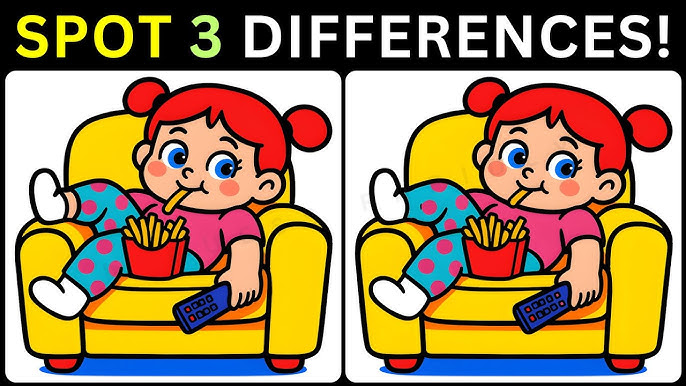
The image above is a perfect example. It shows a cheerful child lounging on a bright yellow armchair, holding fries, sipping through a straw, and keeping a TV remote close at hand. At first glance, the two pictures look exactly the same. But look a little closer, and you’ll realize that three clever differences have been hidden between them.
Spot-the-difference puzzles like this one aren’t just fun—they’re also great for boosting focus, sharpening observation skills, and providing a little burst of joy when you finally uncover the hidden changes. Let’s take a closer look at this puzzle, reveal its three differences, and explore why these games have such universal appeal.
The Scene: A Cozy Snack Time
The puzzle illustration captures a playful and relatable moment. A red-haired child with pigtails is comfortably seated on a large yellow chair, enjoying a snack of fries. With one hand, they hold the fries, and with the other, they casually grip the television remote. Their colorful outfit—blue pants decorated with pink circles and a pink shirt—adds to the bright and cheerful atmosphere.
It’s a familiar, everyday scene. Maybe the child is enjoying a weekend afternoon, relaxing after school, or simply having some screen time before bed. This sense of ordinary comfort is what makes the puzzle so relatable—and what makes spotting the differences so much fun.
The Three Hidden Differences
Now, let’s zoom in on the details. If you carefully compare both pictures, here are the three differences you’ll spot:
- The Remote Control
- In the left picture, the TV remote has a blue set of buttons.
- In the right picture, the remote buttons are black, making the design look slightly different.
- The Pants Design
- On the left, the child’s pants are decorated with pink circles.
- On the right, the circles are missing, leaving the pants plain blue.
- The Child’s Hair Buns
- On the left side, the hair buns are smaller.
- On the right side, the buns appear larger and rounder, changing the overall hairstyle slightly.
At first glance, these differences might seem minor, but finding them requires a careful eye and attention to detail—exactly what makes these puzzles rewarding.
Why Spot-the-Difference Puzzles Are So Popular
The timeless popularity of these puzzles can be explained by a few simple reasons:
- Easy to Understand: No rules or instructions are needed—just look and compare.
- Quick Fun: They take only a few minutes, making them perfect for breaks.
- Universal Appeal: Children, parents, and even grandparents can enjoy them together.
- Satisfying Challenge: Each difference you find feels like a small victory.
Unlike complex games that require long hours of play, spot-the-difference puzzles fit seamlessly into our busy lives while still offering joy and mental stimulation.
Cognitive Benefits of Spot-the-Difference Games
What seems like a simple visual puzzle is actually an excellent workout for your brain. Here’s how:

1. Sharper Observation Skills
You train your eyes and brain to notice even the smallest details—like patterns, colors, or shapes—that are easy to miss in daily life.
2. Improved Concentration
To succeed, you must stay focused on comparing the two images, blocking out distractions. This focus practice helps in school, work, and everyday tasks.
3. Memory Boost
Your brain constantly recalls what you saw in one picture while checking against the other, strengthening short-term memory.
4. Stress Relief
The puzzle offers a playful distraction, allowing you to relax while staying engaged. It’s a form of “active relaxation” that helps reduce stress.
5. Problem-Solving Skills
You learn patience, persistence, and strategies to spot differences—skills that translate into real-world problem-solving.

Educational Value for Children
For children, spot-the-difference puzzles are not just fun—they’re educational tools disguised as games. Parents and teachers often use them because they:
- Encourage visual learning by developing pattern recognition.
- Improve patience and attention span.
- Provide practice in comparison and logical thinking.
- Help with hand-eye coordination if children circle or point out differences physically.
The bright colors and cheerful characters in this puzzle make it especially appealing to young learners, encouraging them to focus while still enjoying the process.
Why Adults Should Play Too
Spot-the-difference puzzles aren’t just for kids. Adults can benefit equally, if not more, from them:
- They provide mental stimulation and keep the brain sharp.
- They act as a short break from stressful tasks.
- They encourage mindfulness, teaching you to slow down and observe.
- They trigger nostalgia, reminding you of childhood activity books or magazines.
In today’s digital-heavy world, where attention spans are shrinking, these puzzles serve as a fun way to rebuild focus and concentration.
Tips for Spotting Differences Faster
If you ever find yourself stuck while working on puzzles like this, here are some tried-and-true strategies:

- Scan in Sections – Divide the image into parts (top, middle, bottom) and compare one section at a time.
- Look for Common Change Types – Differences often involve missing patterns, color swaps, or object sizes.
- Check Outlines – Sometimes, changes are in the shape of objects rather than colors.
- Take a Break – If your eyes feel tired, step away for a moment. A fresh look often reveals the missing detail immediately.
- Start with Obvious Objects – Begin with large, central objects (like the child’s pants or the remote), then move to smaller details.
Using these strategies will not only make solving quicker but also more enjoyable.
Spot-the-Difference in the Digital Age
Traditionally, these puzzles appeared in magazines, comic books, and weekend newspapers. Today, they thrive on digital platforms—shared widely on social media, apps, and websites. Many online versions even include timers and scoring systems, adding a competitive edge.
This modern evolution has introduced classic puzzles to new generations, making them a perfect blend of nostalgia and innovation. The colorful image of the child on the yellow sofa perfectly represents how traditional puzzles have adapted to stay engaging in today’s fast-paced world.
Conclusion
The “Spot 3 Differences” puzzle with the child on the sofa is a cheerful and clever challenge. From the missing pink circles on the pants to the different remote buttons and the changed hair buns, each small detail tests your ability to observe carefully.
These puzzles prove that even the simplest games can bring joy, improve mental skills, and provide a quick, refreshing break from daily routines. Whether you’re a child learning patience or an adult looking to relax, spot-the-difference puzzles offer benefits that go far beyond entertainment.

So, the next time you come across one, don’t just glance at it—dive in, take your time, and enjoy the little thrill of discovery. Because sometimes, the biggest fun comes from noticing the smallest changes.
Leave a Reply