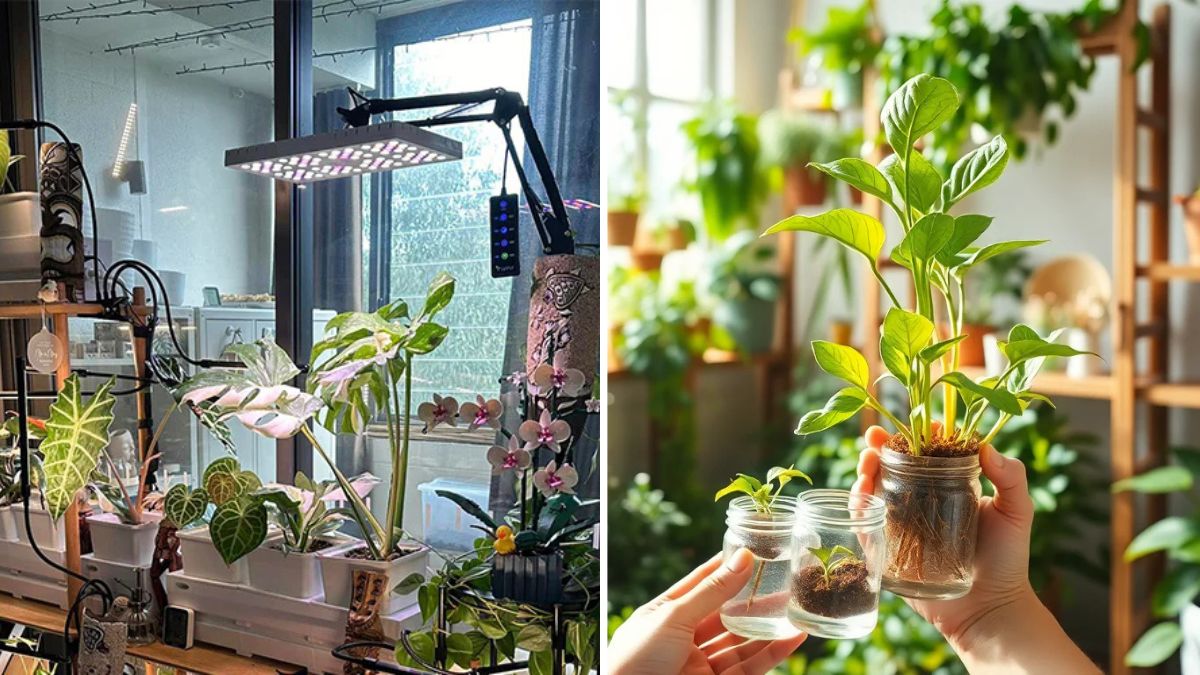
Bringing plants indoors is one of the easiest ways to enhance your living space. Lush greenery not only beautifies your home but also improves air quality, boosts mood, and even reduces stress. However, indoor plants often struggle when their environment doesn’t mimic their natural habitat. If your houseplants are showing yellow leaves, drooping stems, or slow growth, it may be a signal that their growing conditions are off.
Creating the perfect indoor growing environment is key to helping plants thrive. With some careful attention to light, water, humidity, temperature, soil, and care routines, you can transform your indoor space into a plant paradise. Here’s a comprehensive guide on how to provide your plants with optimal conditions, no matter your home setup. 🌱
🌞 1. Optimize Light for Healthy Growth
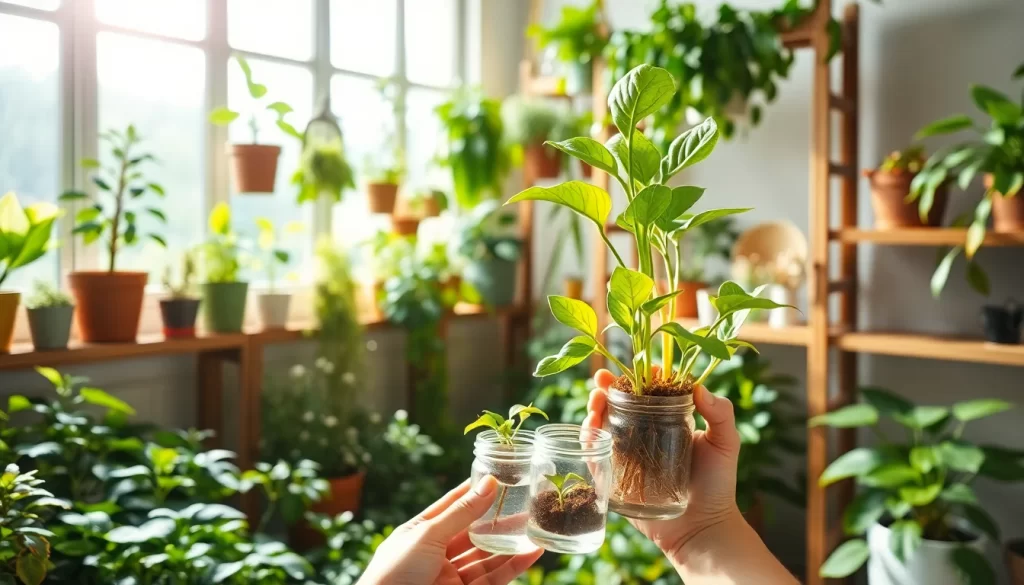
Light is the most important factor for photosynthesis — the process by which plants turn light into energy. Without adequate light, growth slows, leaves fade, and plants can become leggy.
🌿 Steps to Provide Optimal Light:
- Identify light levels: Determine whether your indoor areas have bright, indirect, low, or direct light.
- Place plants accordingly:
- Bright, indirect light: Ideal for monstera, fiddle leaf figs, and peace lilies.
- Low light: Snake plants, ZZ plants, and pothos.
- Direct sunlight: Succulents and cacti.
- Use grow lights: For rooms without natural light, LED grow lights can provide full-spectrum light for 12–16 hours per day.
- Rotate plants regularly: This ensures all sides receive equal light and prevents uneven growth.
💡 Quick Tip:
Pay attention to leaf color and shape — pale leaves or elongated stems often indicate insufficient light. Adjust placement accordingly.
💧 2. Water Properly: Not Too Much, Not Too Little
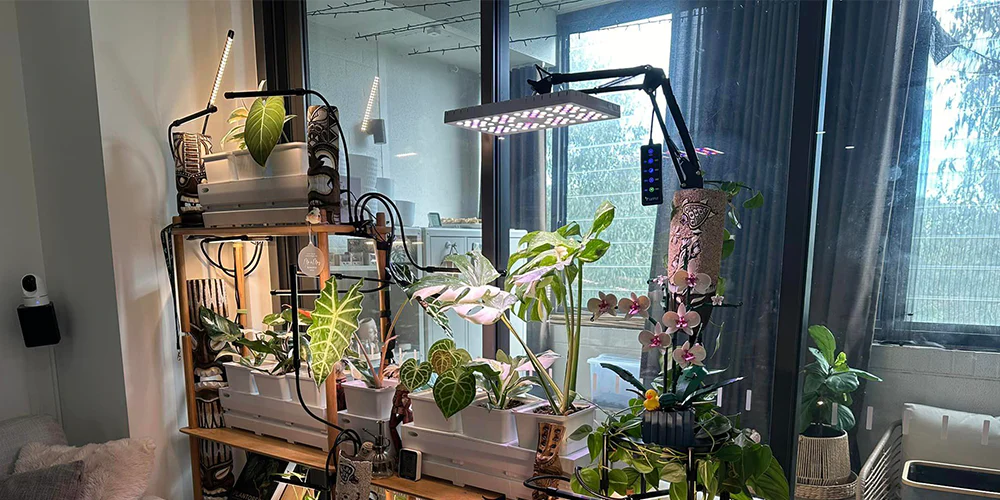
Water is essential for nutrient absorption and photosynthesis. Yet overwatering and underwatering are the most common indoor plant problems.

🌿 Tips for Proper Watering:
- Check soil moisture: Use your finger or a moisture meter to ensure the top inch of soil is dry before watering.
- Water thoroughly: Ensure water reaches the roots, then let excess drain away.
- Group plants by watering needs: Succulents and tropical plants have very different water requirements.
- Use self-watering pots for busy schedules: These keep soil consistently moist without the risk of overwatering.
💡 Science Behind It:
Roots need both water and oxygen. Overwatering fills air pockets, suffocating roots, while underwatering prevents nutrient transport. Proper watering maintains balance, keeping plants energized and growing.
🌬️ 3. Maintain Ideal Airflow and Ventilation
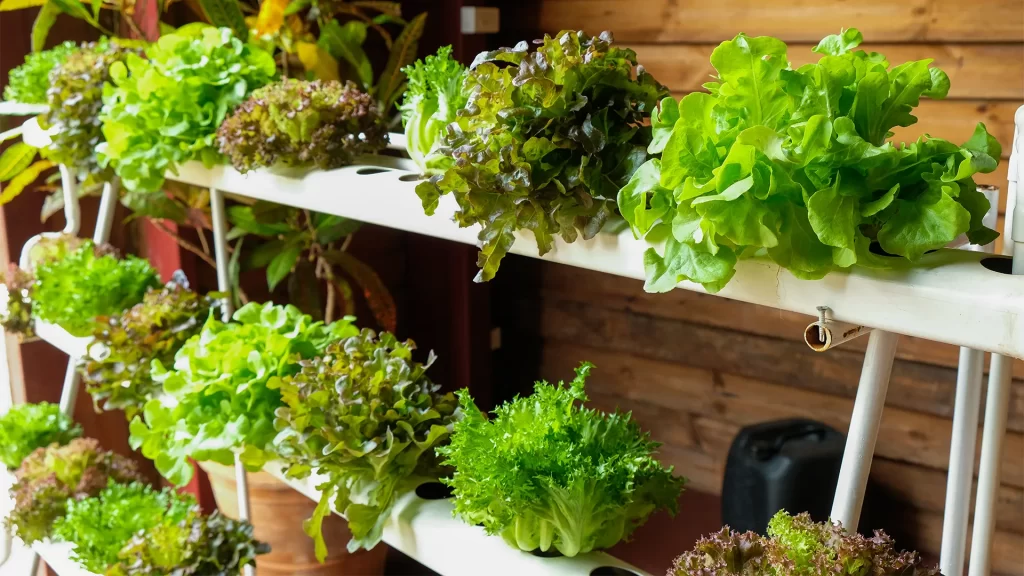
Stagnant air slows growth and increases the risk of fungal infections and pests. Plants thrive in spaces with gentle, consistent airflow.
🌿 Steps to Improve Air Circulation:
- Open windows periodically to exchange fresh air.
- Use a small fan on low speed to circulate air in plant-dense rooms.
- Avoid placing plants too close together — spacing ensures airflow reaches all leaves.
💡 Quick Tip:
Good airflow not only prevents disease but also aids in carbon dioxide absorption, which is crucial for photosynthesis.
🌡️ 4. Control Temperature for Optimal Growth
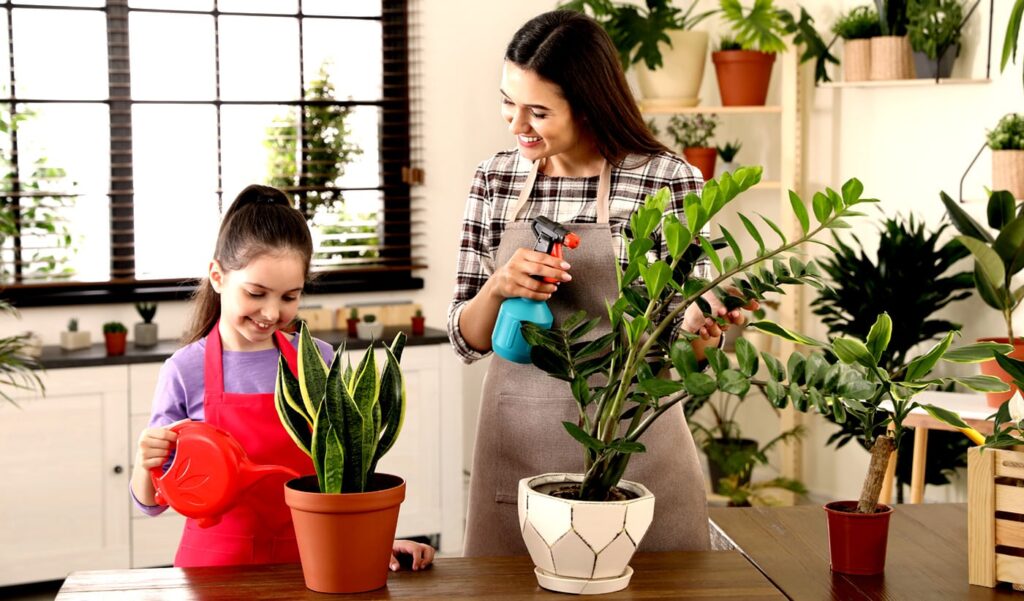
Temperature affects how plants grow. Most indoor plants are tropical in origin and thrive in moderate, stable temperatures.
🌿 Ideal Temperature Ranges:
- Tropical plants: 65–80°F (18–27°C) during the day, slightly cooler at night.
- Succulents and cacti: 70–85°F (21–29°C) during the day, cooler nights are acceptable.
🌿 Tips for Temperature Management:
- Avoid placing plants near heating vents, air conditioners, or drafty windows.
- Keep a consistent temperature — sudden changes can stress plants, slowing growth.
- Use indoor thermometers to monitor room conditions.
💡 Science Behind It:
Temperature influences metabolic activity. Too cold, and growth slows. Too hot, and plants lose water faster, which can lead to stress or wilting.

💦 5. Maintain Proper Humidity
Many indoor plants, especially tropical species, thrive in high humidity. Dry indoor air, particularly during winter, can cause leaf browning and slow growth.
🌿 Steps to Boost Humidity:
- Use a humidifier near plant clusters.
- Place plants on a pebble tray filled with water to create a natural microclimate.
- Group plants together to share moisture through transpiration.
- Mist plants lightly in the morning to avoid fungal issues overnight.
💡 Science Behind It:
Humidity keeps stomata open on leaves, allowing for efficient gas exchange. Proper moisture levels promote faster growth and healthier leaves.
🪴 6. Choose the Right Soil and Containers
The right soil and pots are critical for root health, nutrient absorption, and water management.
🌿 Tips for Soil and Pots:
- Use well-draining soil: Cacti and succulents need sandy, gritty soil, while tropical plants thrive in peat-based mixes with perlite.
- Ensure proper drainage: All pots should have holes to prevent water from pooling at the bottom.
- Repot regularly: Every 12–18 months, refresh soil and give roots room to grow.
- Add fertilizer carefully: Use slow-release pellets or liquid fertilizer during growing season to provide nutrients.
💡 Quick Tip:
Healthy roots mean healthy growth. Never compromise on soil quality or drainage.
🧹 7. Keep Plants Clean and Healthy
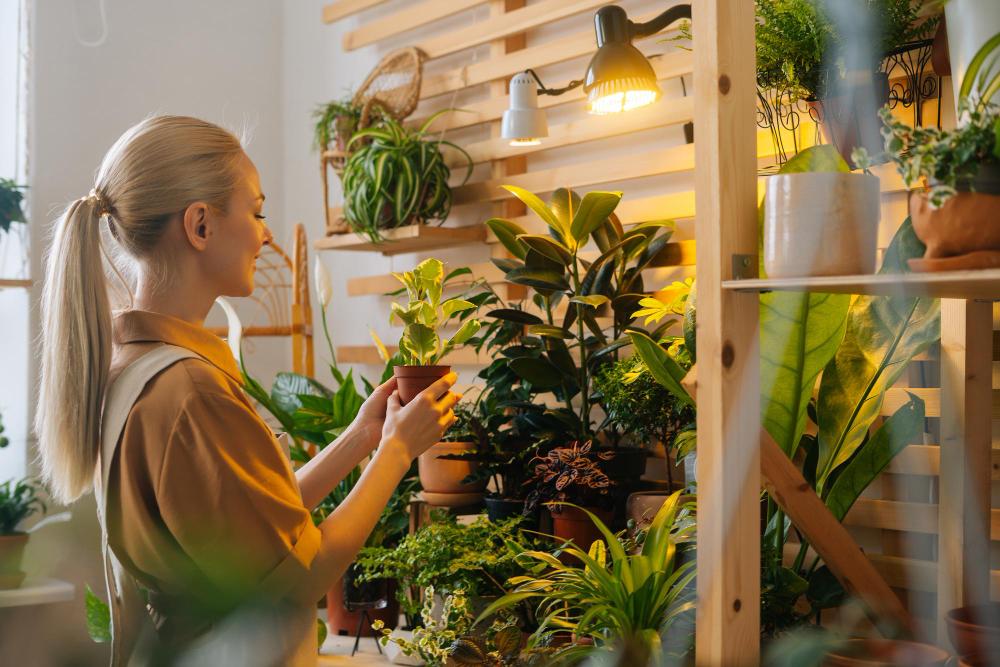
Dust and debris on leaves block sunlight and slow photosynthesis. Additionally, removing dead leaves prevents disease and pests.

🌿 Daily/Weekly Cleaning Routine:
- Wipe leaves gently with a soft, damp cloth.
- Remove yellowing or brown leaves promptly.
- Check for early signs of pests like aphids, spider mites, or scale insects.
💡 Quick Tip:
Regular cleaning is a small task with a big impact — it boosts light absorption and overall plant energy.
🌾 8. Monitor Growth and Adjust Care
Every plant has its own pace of growth. Tracking progress helps you fine-tune your indoor growing environment.
🌿 Steps to Monitor Growth:
- Keep a journal of watering, fertilizing, and pruning.
- Take photos monthly to observe changes in leaf size and stem length.
- Adjust care routines based on seasonal growth patterns.
💡 Quick Tip:
Pay attention to plant signals. Drooping, discoloration, or stunted growth usually indicates environmental stress. Reacting early prevents long-term damage.
🌱 9. Seasonal Adjustments for Optimal Indoor Conditions
Plants respond to seasonal changes, even indoors. Temperature, light intensity, and humidity fluctuate naturally throughout the year.
🌿 Seasonal Adjustments:
- Winter: Light decreases and air dries out — move plants closer to windows and increase humidity. Reduce watering frequency.
- Spring/Summer: Growth increases — water and fertilize regularly. Ensure sufficient light exposure.
- Fall: Growth slows — decrease fertilizer and monitor watering.
💡 Quick Tip:
Adjusting care with the seasons ensures plants remain resilient and energetic year-round.

🧘♀️ 10. Create a Consistent Routine
The best indoor environment is one paired with consistent daily and weekly care. Even small habits make a huge difference.
🌿 Beginner-Friendly Routine Example:
- Daily: Check soil moisture, observe leaves, wipe dust.
- Weekly: Water according to plant needs, rotate plants, and inspect for pests.
- Biweekly: Mist tropical plants, check humidity, and fertilize if needed.
- Monthly: Prune dead leaves, inspect roots, and refresh soil if necessary.
Consistency builds a thriving indoor ecosystem and ensures your plants are healthy, vibrant, and full of life.
🌼 Final Thoughts
Creating the perfect indoor growing environment is a combination of light, water, humidity, temperature, soil, and attention to detail. By understanding your plants’ natural needs and incorporating simple daily and weekly routines, you can cultivate an indoor jungle that flourishes year-round.
Whether you’re a beginner or seasoned plant parent, these steps will help your plants grow stronger, greener, and more beautiful. A well-maintained environment reduces stress for both you and your plants while maximizing growth potential. 🌿💚
Start today — adjust light, monitor water, boost humidity, and make plant care a mindful habit. In time, your indoor garden will reward you with lush foliage, vibrant growth, and a healthier, happier living space.

Leave a Reply