In a world dominated by fast-paced digital distractions, brain-training puzzles have made a powerful comeback. Whether it’s a Sudoku grid on your phone, a crossword puzzle in the daily newspaper, or a visual puzzle that dares you to find subtle differences between two images, each of these games plays an important role in boosting cognitive function, enhancing memory, and improving focus. Today, we’ll take a closer look at a fun and engaging visual puzzle — a “Spot the Difference” challenge that tasks you with identifying three subtle changes between two almost identical images.
Let’s explore what makes these puzzles so valuable for the brain, analyze the image in question, and break down the three differences that make this puzzle both fun and mentally stimulating.
What is a “Spot the Difference” Puzzle?
“Spot the Difference” puzzles are a classic form of visual challenge that asks participants to compare two nearly identical images and identify differences between them. These differences may be in color, shape, size, or even entire missing elements. The concept sounds simple — but completing these puzzles quickly and accurately takes sharp observation, attention to detail, and often a good memory.
Puzzles like these are used for entertainment, education, and even cognitive therapy. Children use them to develop hand-eye coordination and improve visual perception, while adults find them useful for exercising the brain and reducing cognitive decline as they age.

The Image: Man at the Gas Station
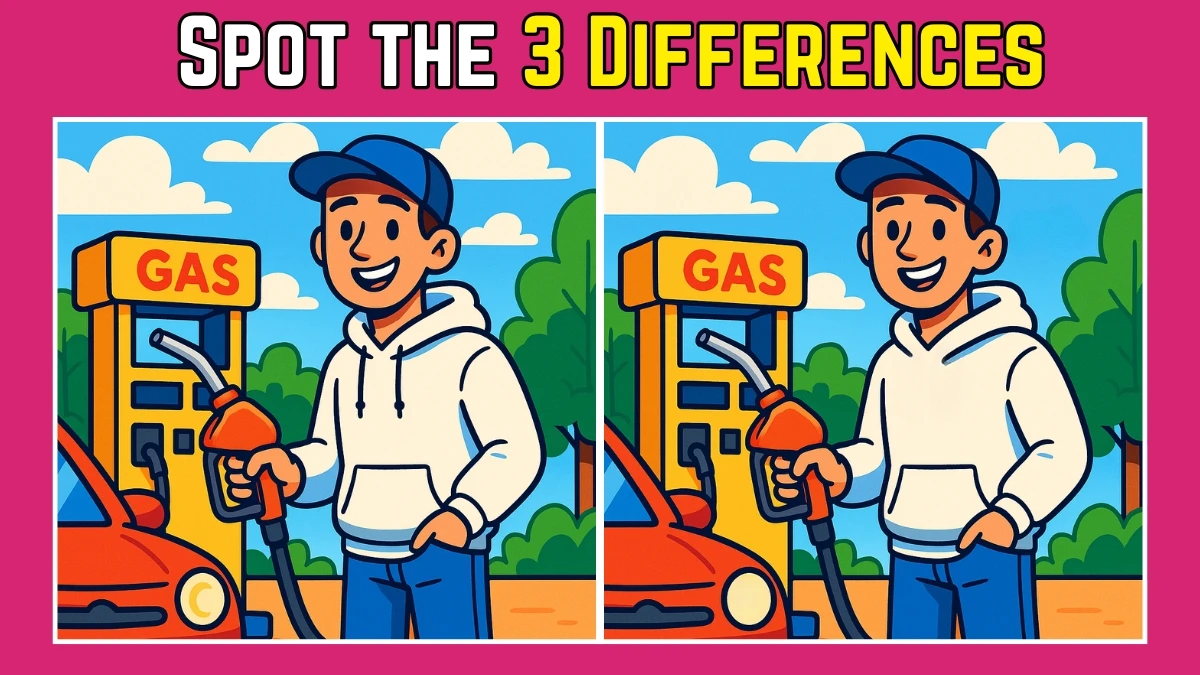
In the puzzle above, we see a cheerful man at a gas station, fueling up his red car. He’s wearing a white hoodie and a blue cap, standing confidently with one hand holding the gas nozzle and the other in his pocket. Behind him, the yellow gas pump is prominently labeled “GAS,” and in the background, we see some lush green trees, a partly cloudy sky, and the overall vibe of a pleasant day.
At first glance, the two images seem identical — but a closer look reveals that three distinct differences have been cleverly embedded in the picture. Before revealing the solutions, take a moment to scan the image yourself. Can you spot them all?
The Three Differences Explained
If you’re still puzzling over the image, don’t worry — these visual challenges are designed to trick the eye and train the brain. Here are the three differences between the two images:
1. The Hoodie String is Missing
In the left image, both strings of the man’s hoodie are visible. But in the right image, one of the hoodie strings is missing — specifically, the string on the viewer’s left side (his right side) is gone. This is a classic example of how a small, almost unnoticeable change can slip past even the most observant eyes.

Why it’s tricky: Since both hoodie strings are usually symmetrical, our brains tend to assume both are present. The mind fills in missing information based on symmetry, making this change harder to detect unless you specifically examine that area.
2. The Front Grill of the Car is Different
If you look closely at the red car in both images, you’ll notice that the front grill is different. In the left image, there’s no horizontal black grill line above the headlight, but in the right image, it appears. This change is subtle but shifts the design of the car slightly, especially since it’s tucked into the lower corner of the image.
Why it’s tricky: Because it’s near the edge of the image, the car’s front grill is not the focal point. Most people focus on the man or the gas pump, so the small detail on the car can easily be overlooked.
3. Gas Pump Nozzle Missing from Pump
This one’s a bit more obvious once you know where to look. On the gas pump in the background, there is a black nozzle resting in the holder in the left image. In the right image, this nozzle is completely gone.

Why it’s tricky: Since your attention is focused on the man holding the gas nozzle, you might not think to check whether the gas pump itself still has the spare nozzle in place. The brain tends to filter out background noise when focusing on a task, which makes this type of change extra sneaky.
What Makes These Puzzles So Effective?
“Spot the Difference” puzzles are more than just child’s play. They offer a wide range of cognitive benefits, especially when done regularly. Here’s how:
1. Enhances Visual Perception
These puzzles force your brain to scrutinize details that may seem insignificant at first. Over time, this improves your ability to notice subtle changes in your environment, which can be helpful in everyday tasks like reading, driving, and navigating complex visuals.
2. Boosts Concentration and Patience
To spot minute differences, you must concentrate intensely and stay focused — even when the task gets frustrating. This builds mental stamina and patience, both essential traits for complex problem-solving.

3. Exercises Short-Term Memory
Your brain needs to remember elements from one side of the image while checking the other side. This back-and-forth comparison strengthens short-term memory, especially for visual information.
4. Reduces Stress and Increases Mindfulness
Believe it or not, puzzles like this are also a great stress reliever. They promote a state of mindfulness — the act of being fully present in the moment. Focusing on small visual elements takes your mind off worries and grounds you in the now.
How to Get the Most Out of Visual Puzzles
Want to level up your brain training? Here are a few tips to get the most out of visual puzzles like this one:
- Time Yourself: Set a timer and try to beat your own score. This adds a challenge and helps build mental agility.
- Use a Magnifier Tool (If Digital): If you’re using a digital version, zoom in and examine each quadrant of the image methodically.
- Work with Friends or Family: Solving puzzles in groups adds a social dimension and can make it more fun — especially for kids.
- Make It a Daily Habit: Just like physical exercise, brain training works best when done regularly. Try a puzzle a day.
Conclusion: Sharpen Your Mind with Simple Fun
The humble “Spot the Difference” puzzle, like the one featuring the man fueling up at a gas station, may seem like a simple diversion — but it carries profound benefits for the mind. By engaging in puzzles that test our observational skills, we build up attention to detail, enhance memory, and develop sharper focus, all while having fun.

In today’s world, where multitasking and screen fatigue often dull our senses, taking a few minutes to focus deeply on something as simple as a visual difference can be both therapeutic and mentally enriching. So the next time you see two images that look nearly the same, challenge yourself — you might be surprised by how much your brain appreciates the workout!
Leave a Reply