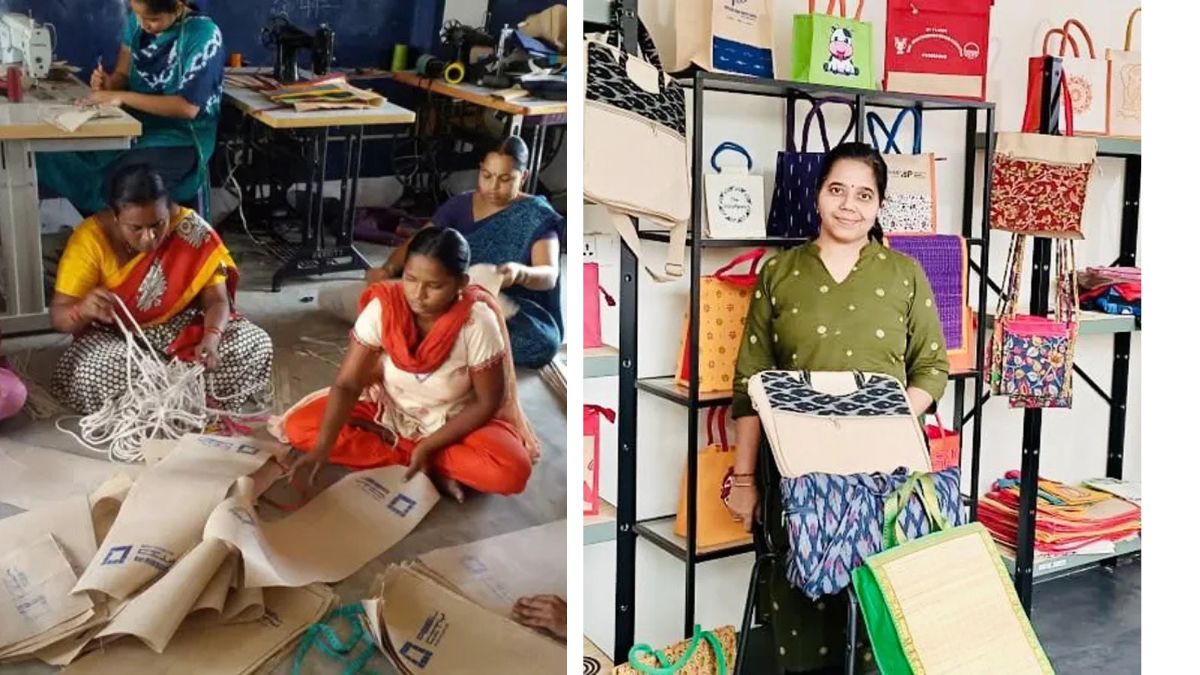
In rural Kolluru, Andhra Pradesh, a quiet yet powerful transformation is underway—led by a woman who left her corporate job to build an eco-friendly bags business that today generates an annual turnover of about Rs. 1 crore. The venture has become more than a business; it is enabling rural women to stand on their own feet, fostering entrepreneurship and creating dignity in work.
From IBM to Village: The Beginning
Annapurna Kalluri’s story begins not in an artisan’s workshop, but in the corporate world. After obtaining an MBA, she joined IBM, working in the hardware marketing team. Her life took a turn in 2006, when she decided to resign from IBM and chart a path deeply rooted in social impact.
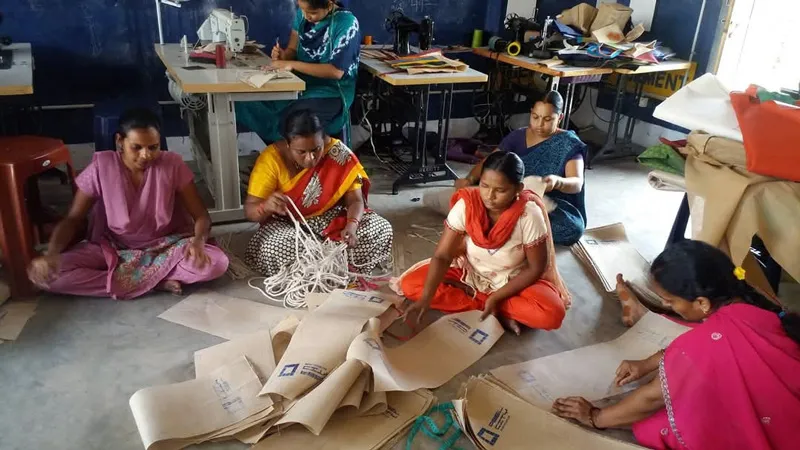
By 2013, she had become involved with ALEAP (Association of Lady Entrepreneurs of India) as a millet entrepreneur. One of her first opportunities was to run a government project in Kolluru, training rural women who depended almost entirely on seasonal farm income. The task? To teach them to make eco-friendly bags. This was not just about learning a skill—it was about creating steady livelihood outside the vagaries of agriculture.
Incubation: Training Centre to Manufacturing Unit
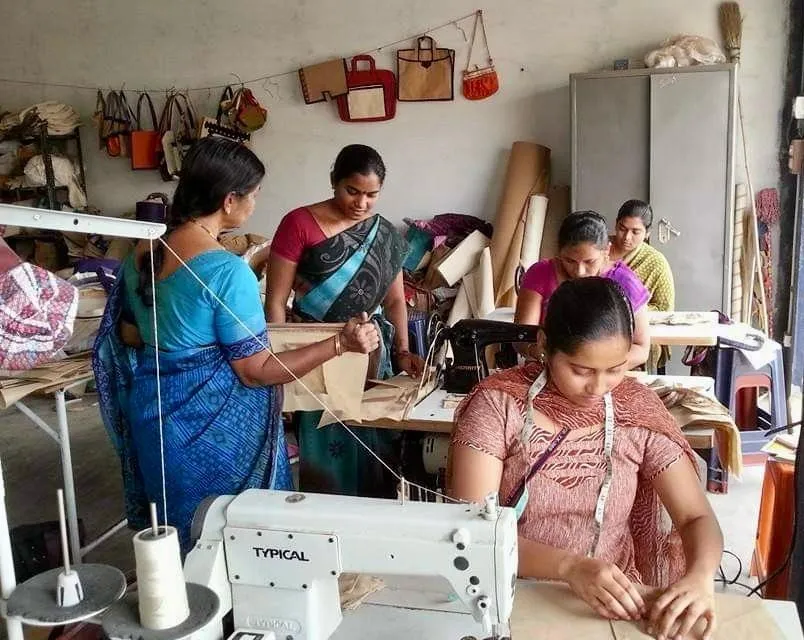
Over the next few years, Annapurna’s training centre in Kolluru trained about 650 women. The skill sets she introduced—cutting, sewing, printing on fabric and jute—opened new possibilities. Yet many trainees lacked the confidence or infrastructure to turn those skills into viable incomes on their own. They asked her to set up a unit, so that orders could be centralized, and they could focus on production, while she handled marketing and sales.

In 2015, she responded. She invested about Rs. 15 lakh to acquire machinery for cutting, screen printing, and stitching. The business was founded as Mathesis Eco Ways LLP, starting modestly with about 20 women workers. Annapurna’s parents moved to Kolluru to support the operations; a master trainer was hired to ensure quality, execution, and consistent training.
Their first order came from a bank—450 bags. Though small, this was a big step. But the execution was not smooth: three days before delivery, the trainer informed Annapurna that work was not ready; only cutting had been done, with no printing or stitching. With a deadline looming, she personally mobilized help—visiting tailors, bag makers, printers in nearby towns. She literally carried materials across different villages and towns to get the job done. That intense episode served as a turning point—it taught her the nuts and bolts of production, and the importance of being deeply involved in every step, not merely in sales or marketing.
Scaling Up: Product, Volume, and Turnover
From those early days, Mathesis Eco Ways has grown steadily. Initially, sales were modest: making about 400 bags a month, sold at prices between Rs. 100 and Rs. 200 depending on size and design. The first year revenues hovered between Rs. 6-7 lakh. Quality control and reliable delivery gradually built credibility, which helped orders increase.
By the time the COVID-19 pandemic hit, the venture had scaled up to about Rs. 60 lakh in annual turnover. The business had also expanded physically, moving to a larger hall for manufacturing. Even during pandemic disruptions, the enterprise adapted—producing masks for health centres, police stations, and local communities when demand shifted.

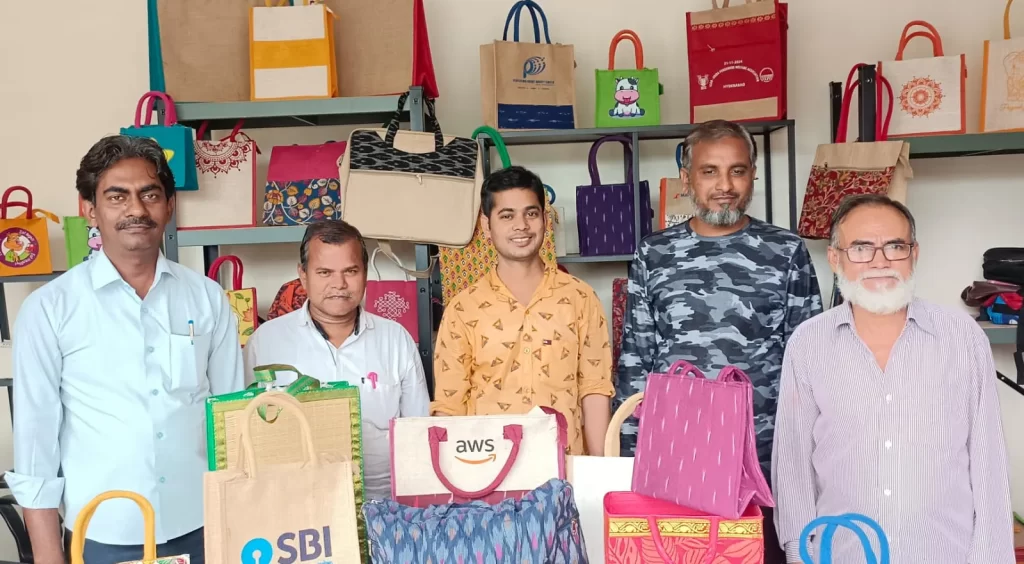
Today, the business clocks about Rs. 1 crore annual turnover. It produces reusable, biodegradable bags made of canvas, cotton, and jute—materials chosen for their eco-friendliness. The product line is geared largely toward corporate bulk orders for events and gifting, but there is also growth into wooden or natural-colour gifting items. The quality, reliability, and sustainable values behind the brand have enabled this growth.
Women’s Empowerment Beyond Employment
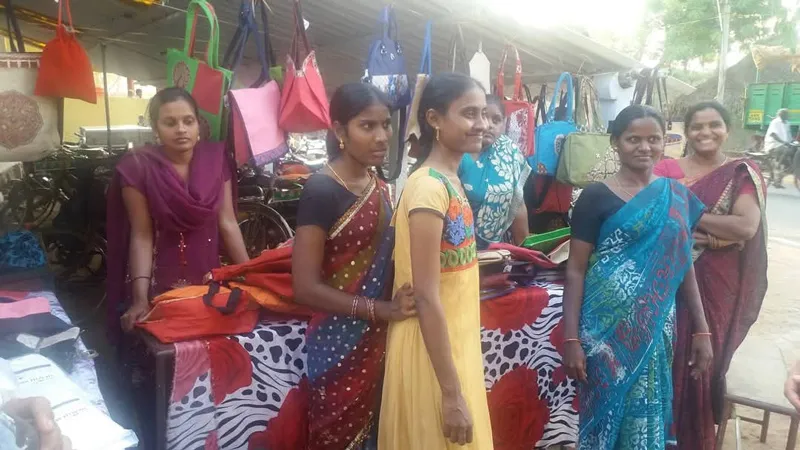
Annapurna’s mission has always been both economic and social. For many of the women trained, this is their first steady income outside farming. They are now able to make decisions about household expenses, educate their children, buy agricultural inputs, and sometimes take bank loans to start microunits of their own.
In fact, some graduates of the training have become micro-entrepreneurs—opening shops in their villages to stitch bags, doing part of the product chain themselves. The enterprise has not been about creating dependency, but enabling independence. The ripple effects go beyond income: there is enhanced confidence, visibility, agency.
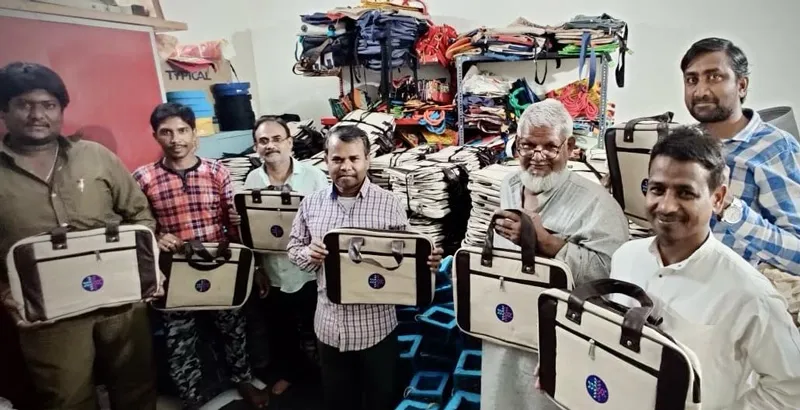
With expansion to Hyderabad, Mathesis now includes a mixed workforce of men and women. Some orders are executed in Hyderabad; some are sub-contracted back to the village women. The interplay keeps the work local, retains women in rural spaces, while also enabling scale and access to urban markets.

Business Strategy & Lessons
Several strategic decisions have underpinned the success of Mathesis:
- Investing early in machinery, training, and quality
The initial Rs. 15 lakh investment in equipment for cutting, printing, stitching enabled larger orders, consistency, and the ability to deliver on time—critical for corporate clients. - Hands-on management and learning every part of the chain
The early crisis (when the trainer failed to deliver) forced Annapurna to engage deeply in production. That became a lesson in understanding what can go wrong, and how to build systems to avoid those pitfalls. - Building credibility through consistent quality
Even when starting small, maintaining standards, building customer trust (especially among corporates), helped orders increase steadily. - Adapting to shifting market conditions
The COVID years were disruptive, but Mathesis pivoted—making masks, serving institutional needs, expanding operations to a second location. This agility kept the enterprise alive through risk. - Social impact embedded
The business does not consider empowerment peripheral—it is central. Training, confidence-building, enabling micro-enterprises are not add-ons but core to the model. - Sustainability as brand promise
Using eco-friendly, reusable, biodegradable materials matters—both for customers (especially corporates who care about ESG) and for environmental alignment. Gifting, events, and corporate clients are increasingly sensitive to sustainability credentials.
Challenges and the Road Ahead
Of course, the journey hasn’t been without challenges:
- Dependence on orders and market cycles
Corporate gifting and institutional orders often come in bursts, and depend heavily on events. During downturns or uncertainties (such as pandemic lockdowns), demand can fall. - Scaling while keeping quality and ethics
As volume increases, ensuring every bag meets durability, design, and ethical standards can be difficult, especially when parts of the work are subcontracted or dispersed. - Logistics, supply chain and cost pressures
Jute, canvas, natural colours, machinery—all have cost inputs that fluctuate. Ensuring inputs are available, affordable, and quality is a persistent challenge. - Competition and price sensitivity
There are many players in eco-bag spaces—some lower cost, others less committed to quality. Balancing price, profit margins, and impact remains tricky.
Looking ahead, Annapurna is expanding not just her product range but also geography. She has adopted another centre in Dindigul (Tamil Nadu) to train women in making wood-based and laser-cut gift items—photo frames, pen stands, gift boxes—broadening her impact and tapping into gifting markets. She also aims to deepen her reach in corporate orders, strengthen marketing channels, and ensure that more rural women become entrepreneurs in their own right.
Why This Story Matters
Annapurna’s journey is important on multiple fronts:

- It shows how entrepreneurship can anchor social impact—not as charity, but as a sustainable business model that empowers.
- It demonstrates that local talent, when given tools, training, and market access, can build credible enterprises even from remote or rural areas.
- It illustrates the rising demand for sustainable, eco-friendly products, especially among corporates for gifting, among events, among consumers who care.
- It provides a model for women’s economic empowerment—how structured training, confidence building, and inclusion in value chains can translate into real agency and change.
- It underscores that small capital, if well-utilised (machines, training, marketing), can scale into substantial turnovers and livelihoods.
Annapurna Kalluri’s venture, Mathesis Eco Ways, is more than about bags. It is about transforming lives, about reimagining what livelihood can mean in rural India. From the first 20 women stitching bags in 2015 to a wider network of women entrepreneurs and a turnover now touching Rs. 1 crore, the story reflects grit, empathy, innovation, and purpose.
As rural women stitch and screen-print, as designs take shape on canvas, jute, and cloth—what is being woven is much larger: a future where eco-values, economic inclusion, and entrepreneurship meet, inspiring many more to pick up the thread.
Leave a Reply