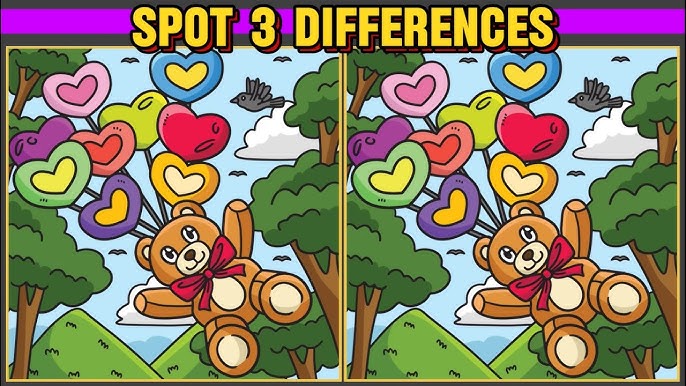
Visual puzzles have a magical charm — they challenge your mind, test your perception, and bring out your inner detective. The image above is one such delightful example. At first glance, it shows a cheerful teddy bear floating in the sky, lifted by a bunch of heart-shaped balloons. The two pictures seem identical, but hidden within are three clever differences that make this puzzle both fun and mentally stimulating.
Let’s explore not only what’s different in these two images but also why “spot the difference” puzzles like this one are such powerful tools for improving focus, observation, and brain agility.
A Bright and Playful Scene
The artwork is bursting with color and joy. The scene depicts:
- A cute teddy bear wearing a red ribbon bow.
- Colorful heart-shaped balloons in shades of yellow, purple, green, blue, pink, and red.
- A blue sky dotted with fluffy white clouds.
- Two trees framing the teddy bear from both sides.
- A bird flying near the balloons.
- Rolling green hills below, creating a peaceful background.
At first sight, both images look exactly the same — a perfect, heartwarming picture of a teddy bear enjoying an airborne adventure. But appearances can be deceiving! Hidden within this adorable illustration are three tiny details that make the two versions subtly different.
The Three Hidden Differences
1. The Balloon Color Change
Take a close look at the balloons — specifically, the one near the top left corner. In the left image, it’s a green heart-shaped balloon with a purple outline. But in the right image, that same balloon has changed color! It’s now pink with a purple border.
This change is easy to miss at first because the vibrant colors blend together beautifully. Yet once you spot it, you’ll notice how the altered balloon adds a different visual balance to the composition.
2. The Missing Bird
Look near the top center of both pictures. In the left image, a gray bird flies between the clouds and the balloons. In the right image, that bird has disappeared completely.
This difference plays on your peripheral vision — our eyes naturally focus on the bear and balloons, so we might overlook small background details like the bird. This is one of the cleverest ways artists make these puzzles tricky — by hiding differences in areas where we least expect them.
3. The Missing Balloon String
Now look closely at the teddy bear’s paw. In the left image, all the balloons have visible strings connecting them to the bear’s hand. But in the right image, one of those strings is missing!
This missing string is a small but noticeable detail once you see it. It gives the impression that one balloon is floating freely, making the right picture subtly different from the original.

These three differences — a color change, a missing object, and a missing connection — perfectly illustrate how visual puzzles combine creativity and perception to engage our brains.
Why “Spot the Difference” Puzzles Are So Effective for the Mind
Although these puzzles seem simple, they have powerful cognitive benefits. Psychologists and neuroscientists have long studied how visual challenges improve attention, memory, and problem-solving skills. Here’s how puzzles like this teddy bear challenge help your mind grow sharper:
1. They Improve Attention to Detail
Spotting differences requires you to slow down and look closely. You can’t rush through — you must examine each part of the image with care. This enhances visual attention and selective focus, skills that are essential for tasks like reading, editing, driving, and even performing surgery.
2. They Boost Visual Memory
While comparing two images, your brain holds one image in short-term memory while scanning the other. This back-and-forth strengthens visual working memory, which helps you remember small details and patterns more efficiently.
3. They Enhance Pattern Recognition
Our brains are wired to detect patterns and symmetry. Spotting differences taps into this natural ability and makes it stronger. The more you practice, the faster you’ll notice inconsistencies in other visual tasks, such as data analysis or design work.

4. They Promote Relaxation and Stress Relief
Believe it or not, solving puzzles like this can be therapeutic. The quiet concentration required helps you forget daily stress and focus entirely on one task. It’s similar to mindfulness — where the mind calms down by immersing itself in the present moment.
5. They Keep the Brain Active and Healthy
Regularly engaging in puzzles helps maintain cognitive agility. This is especially important as we age because it slows cognitive decline and keeps the brain sharp. Even short visual challenges like this one give your mind a beneficial “workout.”
A Brief History of Spot-the-Difference Puzzles
The origins of these puzzles date back more than a century. The first widely published “spot the difference” games appeared in British newspapers in the late 1800s. They quickly became a family favorite — providing light entertainment that could be enjoyed together.
- Early 1900s: Newspapers and comic strips often featured these puzzles as Sunday activities for children.
- Mid-20th Century: They became a staple of magazines and children’s books, helping kids develop attention and concentration.
- Digital Era: Today, spot-the-difference puzzles are everywhere — from mobile apps and educational websites to social media challenges.
Despite changing formats, their purpose has remained constant: to entertain while exercising the mind.
Educational Benefits for Children and Adults
Visual puzzles are more than just fun — they’re educational tools that support cognitive development in both children and adults.

For Children
- Enhances observation and attention span.
- Improves hand-eye coordination (when solved on paper).
- Builds visual discrimination skills crucial for reading and math.
- Encourages patience and problem-solving.
For Adults
- Strengthens memory retention and mental flexibility.
- Provides a relaxing break from work or screens.
- Enhances focus and analytical thinking.
- Can even delay cognitive aging when practiced regularly.
This is why teachers and therapists often use these puzzles in classrooms and therapy sessions — they’re simple, engaging, and effective.
Tips for Finding Differences Faster
If you want to get better at solving these puzzles, try applying the following strategies:
- Don’t rush — Take your time scanning each section.
- Start from the top — Work systematically from one corner to another.
- Compare objects, not areas — Look at specific items like the bear, trees, or balloons.
- Pay attention to color and symmetry — Differences often involve changes in hue, size, or placement.
- Take breaks — If you can’t find the last difference, step away for a moment; your brain often spots it when you return refreshed.
With regular practice, your observation speed and accuracy will improve dramatically.
The Emotional Appeal of Visual Puzzles
Beyond their cognitive value, “spot the difference” games have an emotional appeal. The cute imagery — like the teddy bear in this puzzle — brings feelings of nostalgia, joy, and comfort. It reminds us of childhood innocence, creativity, and the pleasure of simple discoveries.
Every time you find a hidden difference, your brain releases dopamine, the “happiness” chemical. This creates a small but powerful sense of accomplishment that encourages you to keep going. It’s this blend of relaxation and reward that makes these puzzles so universally loved.

Conclusion: Simple Fun, Powerful Impact
This “Spot 3 Differences” teddy bear puzzle might look playful and lighthearted, but it’s actually a great brain exercise. The three subtle changes — a balloon color swap, a missing bird, and an absent string — challenge your mind to observe carefully, focus deeply, and notice details others might miss.
Such puzzles remind us that sometimes, the smallest differences reveal the most significant lessons — about patience, perception, and mindfulness. Whether you’re a child developing attention skills or an adult looking for a quick mental workout, these challenges offer both fun and functionality.
Leave a Reply