In a world saturated with fast-paced media, multitasking, and short attention spans, activities that slow us down and focus our attention are more important than ever. One such timeless activity is the “Spot the Difference” puzzle. Simple in concept but deeply engaging, these visual brain teasers challenge our perception, patience, and concentration.
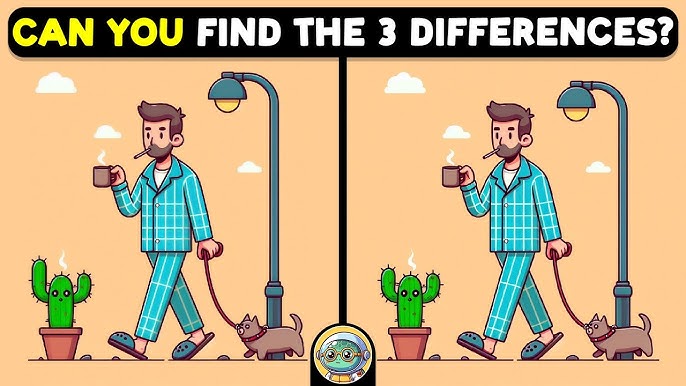
Take the cheerful image above: a man in pajamas, walking his cat while sipping morning coffee. The scene is whimsical, colorful, and tranquil—but hidden within are three subtle differences between the left and right panels. The challenge? To find them all.
This article dives deep into the significance of these puzzles, the psychology behind visual observation, and how such simple images can exercise and sharpen the brain in surprising ways.
The Scene: A Peaceful Morning
The cartoon-style image presents a quirky, peaceful setting. A man in turquoise pajamas is taking a casual morning walk with his pet cat. He’s holding a coffee cup and looks relaxed, as the sun rises behind a pastel sky dotted with clouds. A cactus in a pot, a streetlamp, and the cat complete the scene.
At first glance, the two panels appear identical. But with a more focused look, you can start to spot the differences. And that’s where the fun begins.
Can You Spot the 3 Differences?
Let’s analyze the visual puzzle in detail and identify the three subtle changes between the left and right images:
1. 🔍 The Cloud in the Sky
- Left Image: There are two clouds visible in the background sky.
- Right Image: One of the clouds is missing, leaving only a single cloud above the character.
This is a classic example of a missing element. Because our brains often “fill in” expected elements (like clouds in the sky), it can take a moment to realize something is gone.
2. 🔍 The Streetlamp Bulb
- Left Image: The lamp post above the character has a complete bulb.
- Right Image: The bulb is missing from the streetlamp.
This subtle change might go unnoticed unless you’re specifically comparing both top corners. It’s a great test of spatial awareness and attention to background elements.
3. 🔍 The Cactus Arm
- Left Image: The cactus has two arms, typical of a cartoon-style cactus.
- Right Image: The right arm of the cactus is missing, making it look lopsided.
Since this difference affects the foreground, it’s one of the easier ones to spot. It tests how we notice differences in shape and form.
Why Spot-the-Difference Games Matter
You might think of these puzzles as mere children’s activities or casual distractions, but they have significant psychological and cognitive benefits. Here’s why this seemingly simple game is a powerful tool for the mind:
🧠 1. Boosts Visual Perception
Spotting minor changes trains your brain to process and analyze visual information more accurately. It strengthens your ability to:
- Identify patterns
- Detect inconsistencies
- Notice detail amidst distractions
This is especially useful in professional fields that rely on visual accuracy, such as design, editing, programming, architecture, and even medicine.

🧠 2. Strengthens Focus and Concentration
Completing a spot-the-difference puzzle requires sustained attention. In an age of constant notifications and digital distractions, this type of focused engagement helps retrain the brain to concentrate on a single task.
🧠 3. Encourages Mindfulness
The peaceful, deliberate observation required to solve these puzzles is similar to mindfulness practices. Focusing on the present moment—the lines, colors, and shapes—can be a calming activity that reduces stress and anxiety.
🧠 4. Sharpens Memory and Recall
Your brain must hold details from one image in short-term memory as it compares them to the other. This strengthens working memory, which plays a critical role in learning, reasoning, and comprehension.
🧠 5. Enhances Problem-Solving Skills
Even though there’s no “right” strategy, solving these puzzles usually involves a trial-and-error method. The brain develops methods—scanning left to right, top to bottom, focusing on foreground versus background—which mimic problem-solving strategies in other areas of life.
Puzzles for All Ages
For Children:
Spot-the-difference puzzles are a favorite among educators because they:
- Improve early visual discrimination
- Teach kids to look carefully
- Promote persistence and patience
- Are fun and non-intimidating learning tools
This particular image, with its bright colors, friendly cartoon man, and simple environment, is ideal for young children. They’ll enjoy the humor of a cat on a leash and learn valuable cognitive skills in the process.

For Adults:
Adults benefit just as much—if not more. These puzzles challenge adult brains to stay alert and sharp. They are especially recommended for:
- Seniors looking to maintain cognitive flexibility
- Professionals in detail-oriented jobs
- Anyone needing a mindful mental break during a busy day
The humor and light tone of the image make it enjoyable rather than stressful, which makes it a perfect mental refresh tool during breaks or commutes.
The Art and Psychology of Visual Puzzles
Designers of spot-the-difference puzzles intentionally craft images to strike a balance between similarity and variation. The differences must be:
- Subtle enough to challenge
- Obvious enough to eventually be found
- Varied (color changes, shape removal, object swaps)
This art lies in how humans perceive images. We are wired to recognize patterns and familiar forms. Spot-the-difference puzzles exploit this tendency by subtly disrupting those patterns.
Digital Puzzle Culture
In today’s digital age, visual puzzles have found new life on social media, YouTube, mobile apps, and even brain-training websites. Platforms like Instagram and TikTok feature “spot the difference” challenges with a timer, inviting users to compete or comment on how many differences they found.
The puzzle you’ve shared seems to come from one such platform, using bold typography (“CAN YOU FIND THE 3 DIFFERENCES?”) and engaging visuals to draw in the audience.

This gamification of observation turns cognitive training into entertainment—especially when paired with gentle competition or a countdown timer.
How to Make the Most of These Puzzles
Here are a few tips to maximize the benefits:
- Take Your Time – Rushing through defeats the purpose. Slow, focused observation yields better cognitive results.
- Use a Systematic Approach – Scan both images row by row or quadrant by quadrant.
- Work with a Friend – Solving together is more fun and can enhance social interaction and shared focus.
- Track Your Progress – Try multiple puzzles over time and notice improvements in how quickly or accurately you spot differences.
Conclusion: A Simple Image, A Powerful Tool
Who knew a man walking his cat in pajamas could do so much for your brain?
This light-hearted, colorful illustration offers more than just a laugh—it offers an opportunity to practice presence, observation, and cognitive discipline. Spot-the-difference puzzles remind us that joy and mental exercise can go hand-in-hand.
Whether you’re a child learning to observe the world or an adult sharpening your senses, these puzzles are timeless tools of engagement. They train us to look closer, think deeper, and sometimes, just pause and appreciate the small details.
So next time you find yourself scrolling or needing a mental reset, try a visual challenge. You might just spot something new—not only in the picture but in yourself.

Leave a Reply