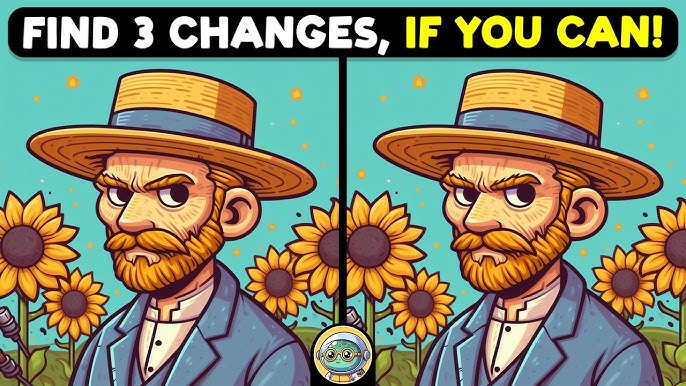
In a digital era of fast content, constant scrolling, and fleeting attention spans, simple puzzles like “Spot the Difference” provide a breath of fresh air. They challenge our brains to slow down, focus, and engage with details that often go unnoticed. The image you see above invites the viewer to find 3 changes—but don’t be fooled by its cartoonish charm. Even the simplest scenes can conceal tricky visual alterations.
The puzzle features a determined-looking man, reminiscent of Vincent van Gogh, standing among blooming sunflowers under a bright blue sky. At first glance, the two panels appear identical. But upon closer inspection, small changes reveal themselves—testing your perception, patience, and mental clarity.
Let’s explore this delightful puzzle in depth: analyze its changes, understand its cognitive value, and appreciate the artistry behind such timeless brain games.
The Scene: A Portrait in a Field of Sunflowers
The illustration captures a man with a wide-brimmed straw hat, red beard, and a serious expression, dressed in a blue coat. Behind him stand several tall sunflowers with dark brown centers and vibrant yellow petals. The sky is dotted with a few orange star-like specks, possibly referencing Van Gogh’s signature post-impressionist style.
The composition is symmetrical and eye-catching, which makes it perfect for a visual puzzle: there are just enough consistent elements to make differences tricky to spot.
Let’s dive into the challenge itself.
Can You Find the 3 Changes?
Here are the three subtle differences between the two versions of the image:
🔍 1. The Hat Band
- Left Image: The blue hat band is complete, going all the way around.
- Right Image: The hat band is missing a section in the front.
This kind of alteration is subtle because it’s located in a natural break in the straw texture. The human brain often fills in missing lines or shapes based on what it expects to see, making such details easy to overlook.
🔍 2. The Sunflower Center
- Left Image: The large sunflower behind the man’s right shoulder (left side of the image) has a normal brown center.
- Right Image: The same sunflower has a black center, making it stand out from the rest.
Changes in object color are one of the most common and effective techniques in spot-the-difference puzzles. It tricks your memory and color perception, especially when surrounded by other, similar tones.
🔍 3. The Man’s Eyebrows
- Left Image: The man has thick, dark eyebrows over both eyes.
- Right Image: His left eyebrow (on the viewer’s right) is missing.
This missing facial detail may not immediately jump out unless you look closely. Facial features tend to blend due to symmetry, so spotting changes here challenges your brain’s perception of human faces.
The Psychology of Spot-the-Difference
Though simple on the surface, these puzzles offer deep cognitive benefits. They stimulate multiple areas of the brain, including those responsible for visual processing, memory retention, and attention control.
Here’s why this kind of activity is more than just a fun pastime:

🧠 1. Strengthens Visual Discrimination
Spotting changes among visually similar elements improves visual discrimination—the ability to notice slight differences in shape, size, color, and positioning. This skill is essential in many professions: editors, designers, surgeons, detectives, and even software testers depend on sharp visual perception.
🧠 2. Boosts Memory and Recall
Your short-term memory is engaged when comparing two images side by side. You mentally record the details from one image, and reference them as you scan the other. Over time, this strengthens both memory and pattern recognition—important traits in both learning and creative thinking.
🧠 3. Trains Focus and Patience
Unlike fast-paced games that encourage quick reflexes, spot-the-difference puzzles reward deliberate focus. You need to slow down, examine each area, and apply logic. This meditative pace enhances mindfulness and patience—qualities often lost in our high-speed digital lives.
🧠 4. Encourages Lateral Thinking
Sometimes the difference is not in what’s changed, but in what’s missing. Spot-the-difference puzzles challenge your brain to think outside the box, training you to see negative space and compare not just what’s there, but what should be there.
Artistic Roots: A Nod to Vincent van Gogh?
The character in this puzzle closely resembles the famous Dutch artist Vincent van Gogh—iconic for his straw hat, red beard, and deep involvement with sunflowers in his artwork. While this puzzle is a cartoon interpretation, it pays homage to Van Gogh’s timeless aesthetic.
Van Gogh’s Connection to Sunflowers
Van Gogh painted his sunflower series during his time in Arles, France, using them to decorate a room for his friend and fellow artist Paul Gauguin. The sunflowers, often seen as a symbol of joy and friendship, contrast dramatically with the artist’s turbulent emotional state—making them a fitting element for a puzzle focused on seeing beyond the surface.

In a way, this puzzle not only tests observation but encourages deeper artistic appreciation.
Educational Applications
For Children:
Teachers and parents can use puzzles like this in the classroom or at home to:
- Teach attention to detail
- Promote visual literacy
- Introduce children to art styles and famous artists
- Provide fun screen-free challenges
This puzzle’s vivid color, cartoon style, and character-based setup make it especially appealing to kids, who naturally engage with storytelling and expressive imagery.
For Adults:
Spot-the-difference puzzles aren’t just child’s play. For adults, they:
- Support cognitive agility
- Aid relaxation and stress relief
- Offer a healthy distraction from digital overload
- Improve productivity by sharpening concentration skills
They’re great for brain training apps, quick team-building exercises, or even printed as desk-side challenges during break time.
Digital Culture and the Rise of Visual Brain Games
On social media platforms like YouTube, Instagram, and Facebook, spot-the-difference content has become viral. These posts often include countdown timers, competitive challenges, and community comments sharing how quickly users found the changes.

What makes them so engaging?
- Interactivity: Viewers aren’t just watching—they’re participating.
- Gamification: With scores, timers, and peer comparison, it becomes a casual competition.
- Shareability: The colorful art and simple challenges make them highly sharable across all ages.
This puzzle, with its bold caption “Find 3 Changes, IF YOU CAN!”, uses this playful challenge tone to draw the viewer in and encourage engagement.
Tips for Spotting Differences Faster
If you’re looking to improve your observation skills and complete puzzles faster, try these techniques:
- Grid Strategy: Mentally divide the image into quadrants and inspect each one thoroughly.
- Focus on Edges and Borders: Many changes occur at image edges or in secondary details like the background or accessories.
- Switch Between Near and Far View: Sometimes stepping back or squinting helps spot inconsistencies.
- Start With the Center: Most artists place central elements deliberately—changes here are easier to spot and set the tone for the rest.
- Look for Missing Elements: Ask yourself what’s not where it should be.
Conclusion: A Puzzle Worth a Second Look
At first glance, this cheerful image of a man among sunflowers may seem like just another piece of colorful artwork. But a closer look reveals a puzzle that challenges perception, memory, and attention. Whether you’re playing for fun, relaxation, or brain training, spot-the-difference games like this one deliver lasting value with a lighthearted twist.
More than just a game, it’s a mental workout wrapped in art—and maybe even a quiet tribute to a great artist.
So, did you find all three changes? If not, don’t worry—give it another look. That’s the beauty of puzzles like this: they invite us to observe more carefully, think more clearly, and enjoy the small details that make a big difference.

Leave a Reply