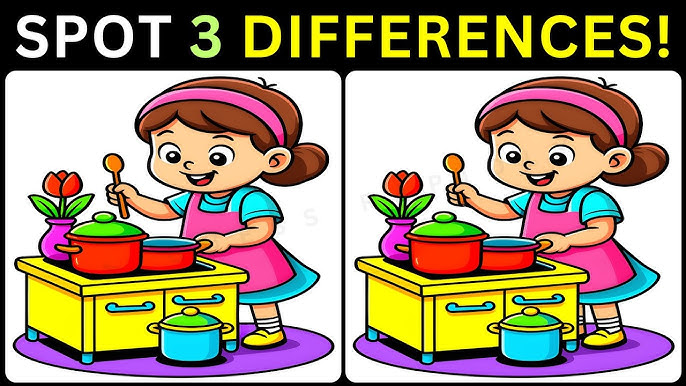
“Spot the Difference” puzzles are a timeless source of entertainment and mental exercise. They are simple in design, yet they offer a surprising level of challenge that keeps both children and adults engaged. The puzzle presented here is a delightful kitchen scene featuring a cheerful little girl cooking with colorful pots, flowers, and furniture. At first glance, the two images look identical—but hidden within are three clever differences waiting to be discovered.
Your mission: Can you find all three differences?
Let’s take a closer look at the puzzle, identify the hidden changes, and explore why these challenges are such powerful tools for fun and learning.
The Puzzle Scene: A Child’s Play Kitchen
The illustration showcases a cheerful moment of imaginative play in the kitchen. Bright colors, bold outlines, and cartoon-like elements make the artwork inviting and appealing. It’s the kind of scene that immediately captures attention, especially for kids who enjoy pretend cooking.
Key features of the scene include:

- A smiling girl with brown hair tied back, wearing a turquoise shirt, pink apron, and purple shoes.
- A yellow kitchen set with two drawers, a stovetop, and a lower shelf.
- A red pot and a green-lidded pan on the stove.
- A blue cooking pot on the ground in front of the kitchen unit.
- A pink vase with a red flower sitting on the counter.
The two images appear to be identical at first glance. But with a closer inspection, you’ll notice that the artist has hidden three subtle differences.
The Three Hidden Differences
Here are the three changes that set the two images apart:
1. The Girl’s Spoon
In the first image (left), the little girl is holding a spoon with a round end, typical for stirring. In the second image (right), however, the spoon is missing the rounded tip, appearing shorter and incomplete. It’s a small yet noticeable alteration once you focus on it.
2. The Flower Vase
Take a closer look at the vase with the red flower. In the first image, the vase has a complete tulip with three petals visible. In the second image, however, one petal is missing, making the flower look slightly different. This kind of change is easy to miss because our brains often register the flower as “complete” without counting each petal.
3. The Girl’s Shoes
Finally, check the girl’s footwear. In the first image, she’s wearing purple shoes with yellow soles. In the second image, the shoes are completely yellow, making them look different. Since shoes are small compared to the rest of the picture, this difference is cleverly hidden at the bottom of the scene.

So, the three changes are: the missing spoon tip, the altered flower, and the changed shoes.
Why Spot the Difference Puzzles Are So Engaging
At first glance, puzzles like these seem simple. But once you begin comparing the two pictures, the challenge becomes clear. This is what makes them so enjoyable—an easy concept that requires sharp observation and patience.
Here’s why they work so well:
- Visual Trickery
The human brain tends to “fill in” missing details when scanning images. That’s why it’s so easy to overlook tiny differences like a missing petal or shoe color. - Balance of Fun and Challenge
The puzzle is straightforward enough for children to enjoy but also challenging enough to make adults pause and think. This balance keeps people hooked. - Instant Gratification
Each time you spot a difference, you experience a small burst of satisfaction. This “aha!” moment makes the puzzle rewarding and encourages you to keep looking.
Cognitive Benefits of Spot the Difference Puzzles
These puzzles are more than just entertainment—they are powerful tools for mental stimulation. Let’s explore the benefits:
1. Improves Attention to Detail
Players must carefully scan every corner of the image. This practice sharpens visual attention and helps train the brain to notice details that might otherwise be overlooked.

2. Enhances Concentration
To solve the puzzle, you need to stay focused without getting distracted. This ability to concentrate transfers into real-life tasks such as studying or working.
3. Boosts Memory
When comparing two images, your short-term memory is constantly at work. You notice a feature in one picture and then check the other to confirm if it matches. This back-and-forth strengthens memory skills.
4. Encourages Problem-Solving Skills
The puzzle challenges you to think critically and methodically. Should you start from the top, bottom, or focus on specific elements? This develops logical problem-solving approaches.
5. Supports Child Development
For children, these puzzles are more than just fun. They help improve cognitive growth, enhance hand-eye coordination, and build patience and persistence.
6. Reduces Stress
Solving puzzles provides a playful distraction that allows your mind to relax while staying active. It’s a simple way to unwind and de-stress.

Tips for Solving Spot the Difference Puzzles
If you struggle with these challenges, here are some helpful strategies:
- Scan systematically: Instead of jumping around, divide the image into sections and compare piece by piece.
- Focus on edges: Artists often hide differences at the edges or corners, assuming players focus mostly on the center.
- Check key objects: Pay close attention to objects like clothing, background items, or accessories, as they are common areas for hidden changes.
- Zoom in mentally: Break the image into smaller “close-up” sections in your mind, which makes differences easier to spot.
- Practice regularly: Like any skill, observational sharpness improves with practice.
The Fun Factor: Why We Love Finding Differences
Humans have always been drawn to puzzles. From ancient riddles to modern brain teasers, the thrill of solving a mystery is universal. In “Spot the Difference” puzzles, the fun lies in the small victories—the excitement of noticing something you didn’t see before.
It’s also a shared activity. Families and friends often enjoy solving these puzzles together, turning them into moments of bonding and laughter. Kids especially love the competitive element—who can spot the difference first?
Everyday Applications of Observation Skills
Interestingly, the benefits of these puzzles extend beyond entertainment:
- Editing and proofreading: Spotting errors in text becomes easier.
- Workplace accuracy: Helps with detail-oriented jobs like data entry, quality checks, or design.
- Daily awareness: Improves your ability to notice changes in your environment, like a misplaced item or a new road sign.
By practicing with puzzles like this one, you’re not just playing—you’re honing life skills.

Conclusion
The “Spot the 3 Differences” puzzle featuring the girl in her colorful play kitchen is more than just a game—it’s a joyful exercise for the eyes and the brain. The three subtle changes—the girl’s altered spoon, the missing flower petal, and the difference in shoe colors—are cleverly hidden, making the puzzle both challenging and rewarding.
Beyond the fun, puzzles like these provide countless benefits, from improving memory and focus to reducing stress and encouraging patience. They are simple yet powerful tools for both kids and adults to keep their minds sharp while enjoying a playful challenge.
Leave a Reply