Puzzles are more than just entertainment—they’re a workout for the brain. Among the most popular visual brain teasers is the timeless “spot the difference” challenge. These puzzles take two nearly identical pictures and challenge you to find the subtle differences hidden within them.
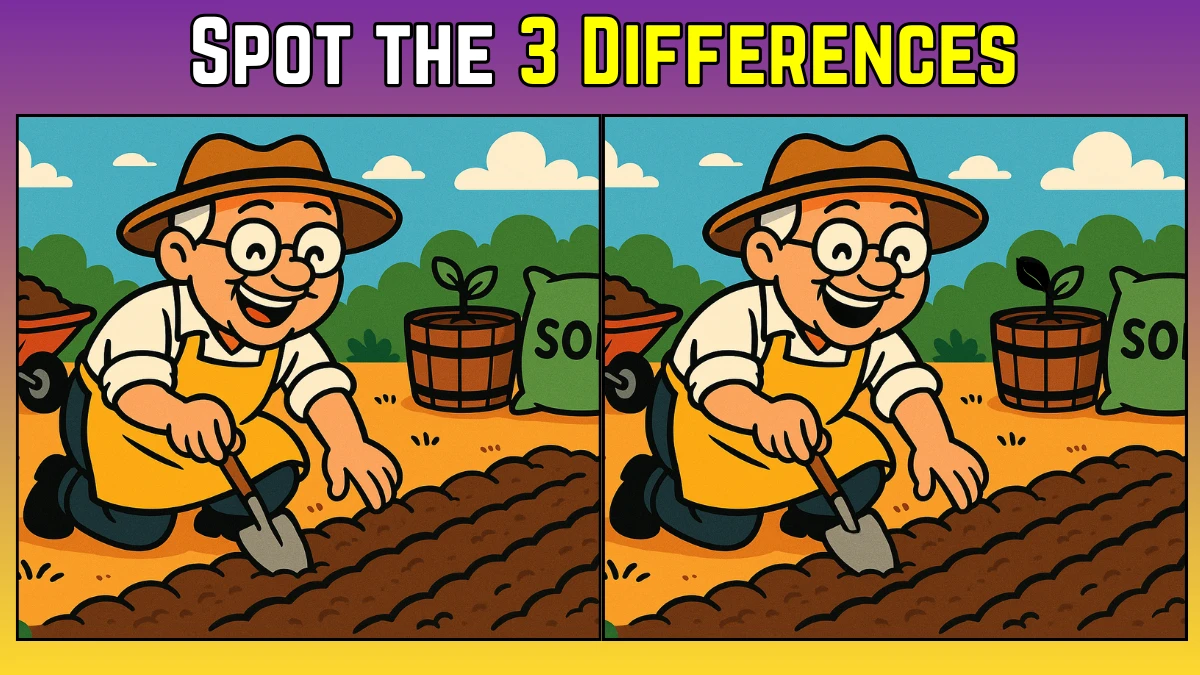
Today, we bring you a delightful farming-themed puzzle. The cheerful farmer in the garden looks the same in both pictures at first glance, but if you look closely, you’ll notice that three clever differences are hiding in plain sight. Your mission? Spot all of them within 9 seconds.
Think you can do it? Let’s dive in!
The Puzzle Scene: A Happy Farmer at Work
The illustration shows a friendly farmer, dressed in a yellow apron and wide-brimmed hat, working diligently in his garden. He’s crouched over the soil with a small shovel in hand, preparing the land for planting. In the background, we see:

- A wooden pot with a small plant growing inside.
- A green sack labeled “SOIL.”
- A mound of dirt piled neatly on one side.
- Bright skies with puffy white clouds and green trees.
Both images are vibrant, cheerful, and warm—perfectly capturing the simple joys of farming. Yet, if you look carefully, there are three differences cleverly hidden between the two illustrations.
The 3 Hidden Differences
1. The Farmer’s Pocket
- In the left image, the farmer’s yellow apron has a small front pocket.
- In the right image, the pocket is missing, making his apron look plain.
This is a classic spot-the-difference trick—small details in clothing are often the first things puzzle makers alter.
2. The Plant in the Pot
- In the left image, the potted plant in the background has two leaves.
- In the right image, the same plant has three leaves.
This is a subtle change that can be tricky to notice since the plant isn’t the main focus of the picture.
3. The Cloud in the Sky
- In the left image, there are two clouds floating above the farmer.
- In the right image, there are three clouds, making the sky look a little fuller.
Changes in the background are often the hardest to detect because our brains tend to focus more on the main subject—in this case, the farmer.

Why This Puzzle Is Challenging
At first glance, the images look identical. That’s because our brains are wired to process the overall picture instead of focusing on small details. Spotting differences requires:
- Sharp observation skills – noticing subtle visual cues.
- Patience – carefully scanning each section of the image.
- Concentration – tuning out distractions and focusing solely on the puzzle.
That’s why many people struggle with these challenges, even though they look easy.
The Psychology Behind Spot-the-Difference Games
Spot-the-difference puzzles are more than just fun—they reveal a lot about how the human brain works.
- Pattern Recognition: Our brains are naturally wired to recognize familiar shapes and patterns. Differences disrupt these patterns, creating a sense of curiosity.
- Selective Attention: We tend to focus on key elements like the farmer’s face, hat, or shovel while ignoring the background. This makes small changes harder to notice.
- Reward System: Each time you successfully find a difference, your brain releases dopamine—the “happy chemical”—making you feel accomplished.
This is why solving even a small puzzle can feel so rewarding.

Benefits of Spot-the-Difference Puzzles
You might think these games are just a fun way to pass time, but they actually provide a variety of cognitive benefits:
- Improves focus and attention to detail.
- Enhances memory by training the brain to compare visual cues.
- Boosts patience and perseverance, as players must carefully scan for small changes.
- Encourages mindfulness, helping reduce stress and anxiety.
- Great for children’s development, teaching observation skills and problem-solving in a playful way.
Strategies to Solve Faster
If you struggled with this puzzle, don’t worry—there are tricks to make spotting differences easier:
- Divide the image into sections: Focus on one area at a time instead of scanning the whole picture randomly.
- Check clothing and accessories: Artists often change small details like pockets, buttons, or hats.
- Look at the background last: Clouds, plants, and objects often hide subtle changes.
- Relax your eyes: Sometimes staring too hard makes it harder to notice differences. Taking a step back can help.
With practice, you’ll be able to solve these puzzles faster and more accurately.
Why Kids and Adults Both Love These Puzzles
- For Kids: They’re fun, colorful, and build essential observation skills while keeping children engaged.
- For Adults: They act as mini brain workouts, helping improve focus and giving the mind a quick challenge.
They also make great family games—compete with your children or friends to see who can find the differences the fastest.

How Spot-the-Difference Relates to Real Life
Believe it or not, these puzzles train skills that are useful in everyday life:
- Detecting errors in documents or spreadsheets.
- Noticing small changes in surroundings.
- Improving focus in high-concentration tasks like driving or studying.
In essence, spotting differences helps sharpen your attention to detail, which is valuable both personally and professionally.
Final Thoughts
This cheerful farming puzzle may look simple, but it cleverly hides three differences:
- The farmer’s apron pocket disappears.
- The potted plant has an extra leaf.
- The clouds in the sky increase from two to three.
If you spotted all three—congratulations! You have a keen eye for detail. If you missed one, don’t worry—these puzzles are designed to be tricky. The more you practice, the better you’ll get.

Spot-the-difference puzzles are more than just a pastime. They’re a powerful way to relax, boost brainpower, and train your eyes to notice even the smallest details. So next time you see one, take a few minutes to play—you’ll be giving your mind a healthy workout while having fun.
Leave a Reply