Spot-the-difference puzzles have always been a favorite pastime for puzzle lovers, kids, and adults alike. Their appeal lies in their simplicity—you don’t need advanced knowledge, special tools, or instructions. All you need are your eyes and your attention to detail.
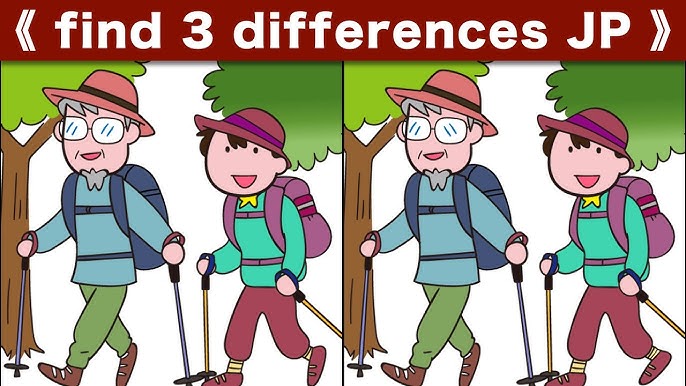
In today’s challenge, we have a delightful cartoon illustration featuring two hikers enjoying a pleasant outdoor adventure. The task is clear: find the three differences between the two pictures. At first glance, they look identical, but upon closer inspection, you’ll notice subtle differences that separate them.
So, let’s lace up our mental hiking boots and dive in!
The Scene: Two Hikers on a Trail
The illustration captures a cheerful and vibrant outdoor setting. Here’s what you’ll notice:
- Two hikers, one older man and one younger, are walking side by side.
- The older hiker wears glasses, a hat with a red rim, a blue sweater, and green pants.
- The younger hiker wears a purple hat, a teal shirt, red pants, and a backpack.
- Both carry walking sticks, suggesting they are out on a hiking or trekking trip.
- Trees in the background provide shade, adding to the natural and adventurous vibe.
It’s a fun, colorful, and inviting illustration that sets the stage for a brain-teasing challenge.
Spotting the 3 Differences
Now, let’s break down the differences one by one. If you haven’t solved it yet, try scanning each section of the image—top, middle, and bottom—before reading further.
1. The Tree Leaves
- On the left side image, the tree leaves behind the hikers are flat along the bottom.
- On the right side image, the leaves have a wavy pattern, making them look fuller and more uneven.
This difference hides in the background, making it easy to miss at first glance.
2. The Older Man’s Collar
- In the left image, the older man has a visible gray scarf or collar detail peeking out from his sweater.
- In the right image, that scarf detail is missing, leaving his neckline plain.
Since it’s near the character’s face, this difference is slightly easier to spot.
3. The Younger Hiker’s Shoes
- In the left image, the younger hiker is wearing brown shoes.
- In the right image, the shoes are red, matching his pants.
This change is clever because the color blends with the pants, making it harder to notice right away.
So, the three differences are:

- The tree leaves’ bottom edge.
- The older hiker’s collar detail.
- The younger hiker’s shoe color.
Why This Puzzle Is Clever
The strength of this puzzle lies in how it distributes the differences across background, clothing, and accessories.
- The tree leaves test whether you’re paying attention beyond the main characters.
- The collar detail challenges your ability to notice small clothing features.
- The shoe color change plays on color blending, a classic trick to fool the eye.
By mixing subtle and slightly obvious changes, the puzzle ensures that no matter how experienced you are, it will take some time and concentration to find all three.
The Psychology Behind Spot-the-Difference Games
Spot-the-difference puzzles are more than just fun—they engage the brain in fascinating ways. Here’s why we find them so satisfying:
- Selective Attention: Our brains are wired to focus on the most prominent parts of a picture—faces, body shapes—while ignoring background elements. That’s why the tree difference is tricky.
- Change Blindness: We often miss small changes in familiar settings. This puzzle uses that weakness to its advantage.
- Pattern Recognition: Our eyes love patterns. When something small breaks that pattern (like missing clothing details), we feel rewarded for noticing.
In fact, every time you successfully find a difference, your brain releases a burst of dopamine, which explains the little thrill of victory you feel.
Benefits of Spot-the-Difference Puzzles
Far from being just casual entertainment, puzzles like this offer genuine cognitive and emotional benefits:

- Boosts Attention to Detail – Training your eyes to notice subtle differences improves focus in real-world tasks.
- Enhances Visual Memory – Repeatedly observing helps strengthen your short-term and long-term memory.
- Reduces Stress – They’re calming and fun, much like mindfulness exercises.
- Improves Patience – Hunting for differences requires persistence and sharpens concentration.
- Suitable for All Ages – Kids develop cognitive skills, adults sharpen attention, and seniors maintain mental agility.
Tips to Solve These Puzzles Faster
If you found this puzzle tricky, don’t worry—there are strategies to improve your skills:
- Scan systematically: Divide the image into quadrants and compare section by section.
- Focus on clothing and accessories: Hats, shoes, and collars often hide differences.
- Check backgrounds: Trees, clouds, and buildings are common spots for hidden changes.
- Zoom in (on digital puzzles): Sometimes differences are very subtle.
- Practice regularly: The more puzzles you attempt, the sharper your eyes will become.
Why Hiking Was a Perfect Theme
This hiking-themed puzzle works especially well because hiking itself is about observing details in nature. On a real trail, hikers notice changes in plants, animals, and landscapes. This puzzle mirrors that experience—training your eyes to see what others might miss.
The combination of cheerful characters, colorful clothing, and outdoor setting makes the puzzle inviting and family-friendly. It’s a wholesome activity that brings joy while sharpening the mind.
Real-Life Applications of These Skills
The ability to notice small differences has important practical benefits:
- Professionals like editors, designers, and engineers rely on sharp eyes to spot mistakes or inconsistencies.
- Doctors and nurses often detect subtle changes in patient conditions.
- Everyday life – Whether it’s spotting missing keys, noticing a new road sign, or detecting changes at work, strong observation skills make life smoother.
So yes, solving this hiking puzzle may actually be training your brain for real-world problem-solving!

Final Thoughts
This hiking-themed “Find 3 Differences” puzzle may look simple, but it’s a brilliant little challenge for your eyes and brain.
The three key differences were:
- The tree leaves at the top.
- The older man’s missing collar/scarf detail.
- The younger hiker’s shoe color.
If you spotted all three, congratulations—you have sharp observation skills! If you missed one or two, don’t be discouraged. Every puzzle you attempt sharpens your attention and builds your patience.
Remember, spot-the-difference games are more than casual fun. They’re brain-boosting exercises disguised as entertainment. The next time you take a real hike, who knows—you may find yourself noticing more details in the trees, trails, and skies around you, thanks to puzzles like this one.
So, did you find all three differences quickly, or did one of them stump you for a while?

Leave a Reply