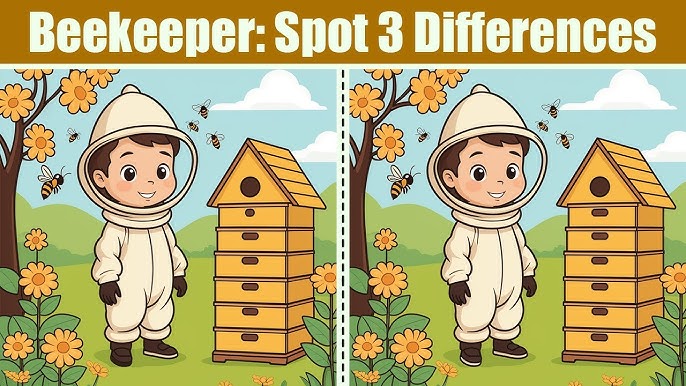
In the buzzing world of brain teasers and visual puzzles, spot-the-difference games continue to hold a special place. They are simple, engaging, and can be enjoyed by people of all ages. The puzzle you see above, titled “Beekeeper: Spot 3 Differences,” is a perfect example of how an ordinary illustration can turn into a delightful mental challenge.
The scene features a cheerful young beekeeper in full protective gear, standing next to a wooden beehive surrounded by blooming flowers and buzzing bees. At first glance, both pictures look exactly the same. But as the challenge suggests, there are three hidden differences waiting to be discovered.
In this article, we’ll explore the fascinating details of this puzzle, uncover the hidden changes, discuss the surprising benefits of playing such games, and even touch on the importance of bees and beekeepers in real life. So, let’s dive in!
The Puzzle Scene: A Charming Beekeeper’s World
The illustration captures a sunny, vibrant outdoor setting. The beekeeper, dressed in a cream-colored suit with protective gloves and boots, smiles confidently as bees buzz gently around him. To his side stands a tall, multi-layered beehive box painted in a golden-yellow shade, resembling the wooden hives used by real apiarists.
The background is filled with lush greenery, orange-yellow flowers in bloom, and a bright blue sky dotted with clouds. It’s a peaceful depiction of a world where humans and bees coexist in harmony—a theme that makes the puzzle not only fun but also meaningful.
Spotting the Differences: Can You Find All Three?
On the surface, both images seem identical. But closer inspection reveals subtle alterations. Here are the three hidden differences you might notice:
- The Beehive’s Opening
On the left image, the beehive has a small circular opening near the top. In the right image, this detail is missing. This change is cleverly hidden, as your eyes are drawn more to the beekeeper than the hive itself. - The Tree’s Flower Count
Look closely at the tree on the left side. In one image, there are more flowers blooming on the branch than in the other. The small alteration makes you appreciate the intricate details artists play with in these puzzles. - The Beekeeper’s Glove
Notice the beekeeper’s left glove. In one picture, it appears slightly smaller and more tucked in, while in the other, it extends longer and looks puffier. It’s a tiny change but enough to trip up an untrained eye.
Did you spot all three on your own? If yes, congratulations! If not, don’t worry—practice makes perfect. The beauty of these puzzles is that they train your brain to become sharper with each attempt.
Why Spot-the-Difference Puzzles Are Good for You
While it may seem like just a fun pastime, spot-the-difference puzzles bring along surprising cognitive, emotional, and educational benefits.
1. Improves Focus and Attention
To find subtle changes, you must observe carefully. This strengthens your ability to focus and pay attention to details, skills that translate to everyday tasks like reading, driving, or problem-solving.
2. Boosts Memory Power
You subconsciously hold parts of the image in your memory as you compare them. Over time, this enhances your short-term memory retention.

3. Relieves Stress
Immersing yourself in a light challenge helps shift focus from daily worries. Like coloring books or crosswords, spot-the-difference puzzles serve as a calming activity.
4. Supports Learning in Children
For kids, these puzzles improve visual recognition, hand-eye coordination, and patience. Teachers often use them to enhance classroom learning while keeping students engaged.
5. Keeps the Brain Active for Seniors
For older adults, such activities keep the brain active and may help reduce the risk of cognitive decline. They act like mental workouts, much like Sudoku or chess.
Beekeeping and Bees: A Real-World Connection
What makes this puzzle even more fascinating is its theme: beekeeping. Let’s take a moment to appreciate the significance of this choice.
- Bees Are Vital Pollinators
Bees play an essential role in pollinating plants, ensuring that crops and flowers continue to grow. Nearly one-third of the food we eat relies on pollination. - Beekeepers as Protectors
Beekeepers, also called apiarists, manage hives not just for honey production but also to support ecosystems. With bee populations declining due to pesticides and climate change, their work is more important than ever. - The Hive in the Puzzle
The tall beehive box in the image is inspired by real “Langstroth hives,” which are widely used in modern beekeeping. These designs make it easier for beekeepers to collect honey without harming the bees.
By connecting fun with education, this puzzle subtly raises awareness about the importance of bees and the role of humans in protecting them.

Tips to Solve Spot-the-Difference Puzzles Faster
Want to sharpen your puzzle-solving skills? Here are some handy tricks:
- Compare One Section at a Time
Divide the image into parts (top, middle, bottom). Scan each area systematically instead of darting your eyes all over. - Look for Symmetry
Pay attention to shapes, objects, and patterns that should mirror each other. Differences often hide in symmetry. - Check Background Details
Many differences hide in clouds, trees, flowers, or props. Don’t just focus on the main characters. - Zoom in Digitally
If solving online, zoom in for a closer look. Sometimes small details become clear only when magnified. - Take Breaks
If stuck, step away for a moment. Returning with fresh eyes often makes hidden differences pop out immediately.
Why Puzzles Like These Are Timeless
Spot-the-difference games have been around for decades, often appearing in magazines, newspapers, and children’s books. Today, they’re popular online and in apps, keeping the tradition alive for new generations.
Their timeless appeal lies in their simplicity and universality:
- No language barriers.
- No age restrictions.
- No need for expensive equipment.
Just two pictures and a curious mind are enough to spark joy.
Bringing Families and Friends Together
One of the most underrated aspects of such puzzles is how they bring people together. Parents and children can solve them as a fun bonding activity. Friends can turn it into a race to see who spots the differences first. Even grandparents can join in, making it a multi-generational game.

This puzzle, with its beekeeper theme, also provides a great conversation starter about nature, food, and the environment. Imagine solving it with your child and then explaining how honey is made—it’s both fun and educational.
Conclusion: Sweet Rewards from a Simple Challenge
The “Beekeeper: Spot 3 Differences” puzzle is more than just a game—it’s a sweet mental workout. By sharpening your focus, memory, and attention to detail, it enriches your brain while giving you a break from daily stress.
Beyond the puzzle itself, it highlights the role of bees and beekeepers in our world, reminding us of the tiny creatures that make such a big difference to life on Earth.
So the next time you come across a spot-the-difference challenge, don’t rush past it. Take a few minutes to dive in, enjoy the process, and celebrate the little “aha!” moments when you uncover each hidden change.
After all, just like beekeeping, patience and attention to detail always bring sweet rewards.

Leave a Reply