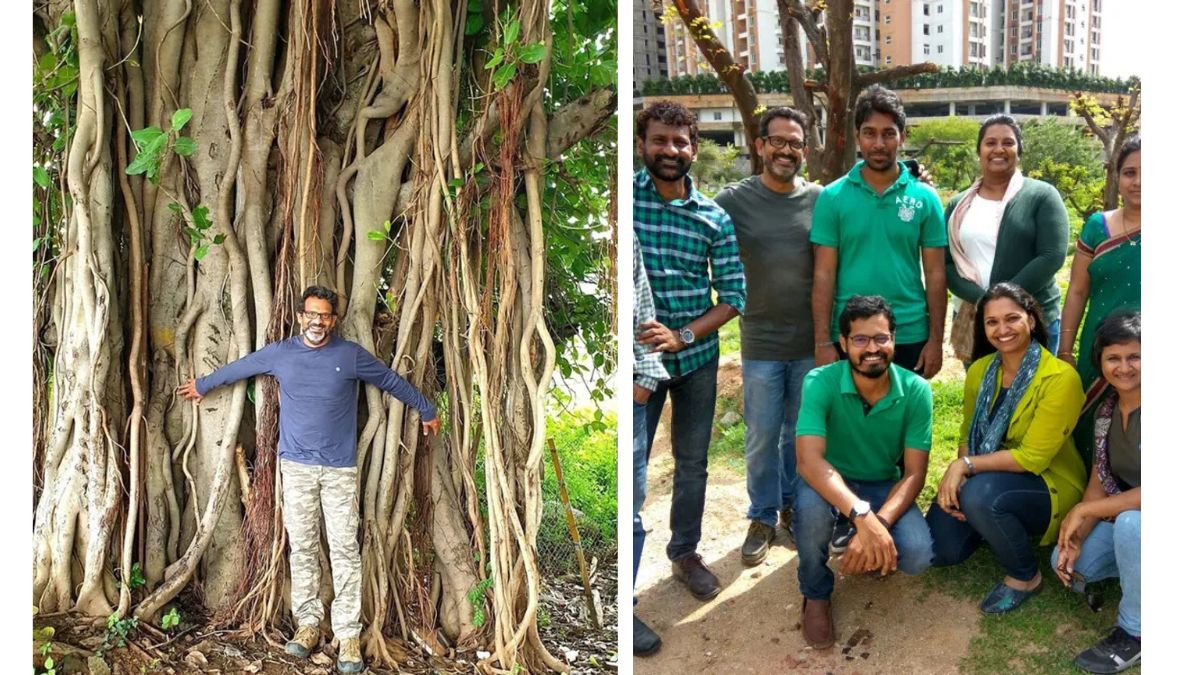
In a world where trees are often the first casualties of development, one man in Hyderabad has turned rescue into a science. Uday Krishna Peddireddi, co-founder of the Vata Foundation, has dedicated his life to saving old trees from being cut down—by translocating them to safer locations where they can continue to thrive.
Over the past decade, Uday and his team have successfully moved more than 2,500 trees across India, achieving an impressive 85% survival rate. His work is redefining urban conservation and proving that growth and greenery can coexist.
A Mission Born by Chance
Uday’s journey began in 2010 when 16 copperpod trees were marked for felling to make way for a pedestrian bridge in Hyderabad’s Kukatpally area. Though he had official permission to cut them, something inside him resisted. Instead of destroying them, he decided to move them to a nearby lane that lacked trees. With the help of locals, he carefully transplanted them—and 13 of the 16 trees survived.
That success planted the seed for what would later become a life-changing mission. “It wasn’t planned,” Uday recalls. “I simply didn’t want to see those trees die. But when I saw them thrive again, I realized that this could be done on a larger scale.”
How Tree Translocation Works
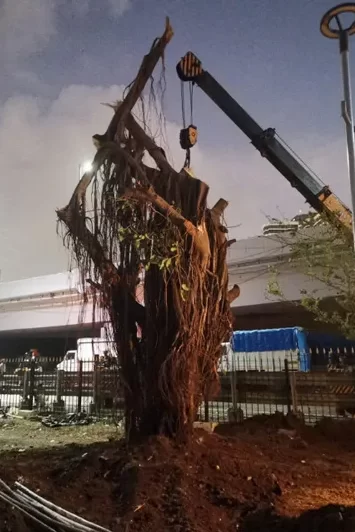
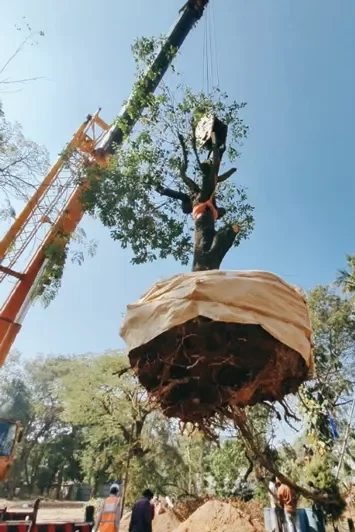
Tree translocation—or relocation—involves carefully uprooting a tree, including its roots and soil base, and replanting it elsewhere. It’s a complex process that requires technical expertise, machinery, and patience.
Typically, the process begins by trimming the branches and root ball and applying bio fungicides to prevent infection. Cranes and earthmovers are used to lift and transport the trees to pre-dug trenches at the new site. Once replanted, the trees receive regular watering and monitoring until they stabilize.

Ideally, the process should span three weeks to allow roots to adjust before being moved. But, as Uday points out, “We rarely get that luxury. In most cases, we’re given two or three days to move dozens of trees because the construction can’t wait.”
Despite the constraints, Vata Foundation’s team has managed to transplant trees of all ages and sizes, including century-old banyans standing 70 feet tall.
A Landmark Rescue
In 2017, Uday faced one of his biggest challenges yet. The Telangana government’s Strategic Road Development Plan required cutting down 100 Peltophorum (copperpod) trees in Kukatpally for a flyover. Locals objected, and the Manikonda Gram Panchayat sought an alternative.
Given only two days to move the trees, Uday brought in five earthmovers and coordinated with volunteers to shift them 25 kilometers away to a graveyard in Manikonda. Out of the 100 trees, 70 survived—a feat that showcased what determination and teamwork could achieve under pressure.
Each such success strengthened Uday’s belief that saving mature trees is worth every effort, no matter how costly or time-consuming. “It takes decades for a tree to reach its full height and provide shade,” he says. “Cutting it in minutes for convenience is a loss that can’t be undone.”
Funding Through Community and Crowdfunding
Tree translocation isn’t cheap. Costs vary depending on the size and distance—anywhere from ₹10,000 for a medium tree to over ₹1 lakh for older, deeper-rooted giants. Initially, Uday paid for these operations from his own pocket. But as the scale of work grew, he turned to social media and crowdfunding to sustain his mission.

His appeals struck a chord. When 320 trees in LP Nagar faced removal, public donations raised ₹4 lakh within days. In another case, schoolchildren crowdfunded to save two banyan trees, with one successfully surviving at its new home.
Crowdfunding not only financed the work but also created a sense of ownership among citizens. “People started realizing they could directly save a tree, not just talk about saving the planet,” Uday says with pride.
A Network of Green Guardians
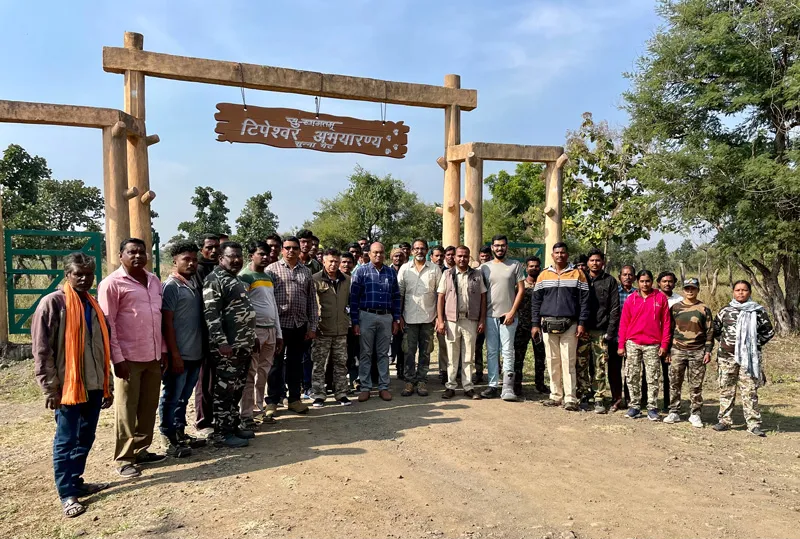
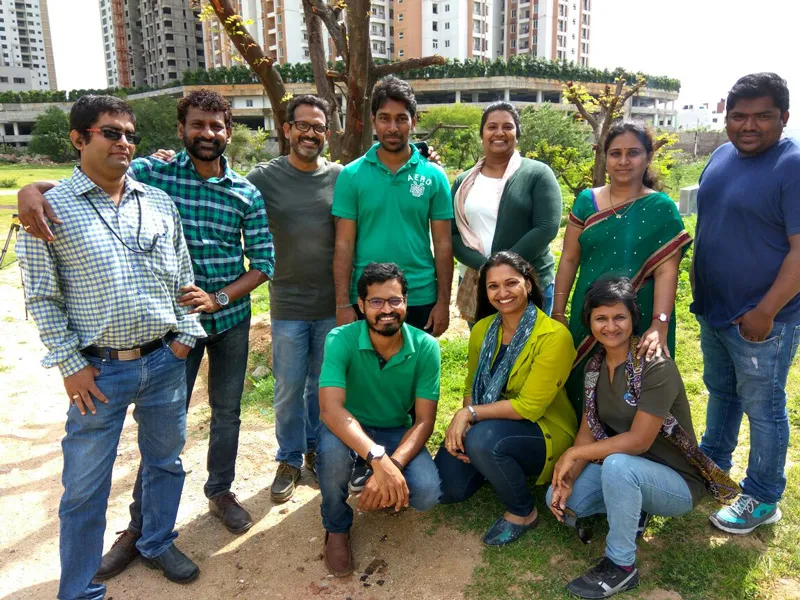
Today, Vata Foundation operates with a core team of 15 people and over 1,000 volunteers across six states—Telangana, Andhra Pradesh, Goa, Maharashtra, Madhya Pradesh, and Uttarakhand. Uday categorizes volunteers into three groups: information providers, who alert the team about trees marked for felling; doers, who help with the physical work; and donors, who sponsor the translocation costs.
The name “Vata,” derived from the Sanskrit word for banyan tree, symbolizes longevity and shelter—values deeply embedded in the foundation’s mission.
Uday also emphasizes partnerships with schools, factories, and local governments. Many rescued trees now find new homes in schoolyards, temple compounds, and even cemeteries—places less likely to see future development. “We prefer to plant in spaces where the trees won’t be disturbed again,” he explains.
The Arambol Banyan: A Symbol of Hope
One of Vata Foundation’s most iconic rescues took place in Arambol, Goa, in 2020. A 90-year-old banyan tree had been uprooted by heavy rains and gusty winds. Locals mourned its fall—the tree wasn’t just part of the landscape but a community gathering spot for yoga, meditation, and local meetings.

Determined to save it, the villagers reached out to Uday. His team traveled to Goa, trimmed the massive branches, dug a 4-foot trench, and used cranes and ropes to lift the tree upright. The effort, costing ₹2 lakh, was funded entirely through crowdfunding by local residents.
A few months later, the banyan stood tall again, sprouting fresh leaves—a living symbol of resilience. “It wasn’t just about saving a tree,” Uday reflects. “It was about restoring a community’s spirit.”
The Hidden Value of Old Trees
For Uday, the motivation goes far beyond sentiment. Trees are silent custodians of the environment—preventing soil erosion, absorbing carbon dioxide, regulating temperature, and nurturing biodiversity. Birds, bees, and countless other species depend on them for survival.
Moreover, large, mature trees provide benefits that young saplings simply cannot match for decades. “Planting new trees is good,” he says, “but preserving old ones is far more impactful. Every tree we save has a story, an ecosystem, and a legacy.”
Beyond Hyderabad: A Growing Green Movement
What began as one man’s act of conscience has grown into a nationwide environmental movement. Vata Foundation now receives calls from across India—from municipal bodies, companies, and communities seeking to save their trees rather than cut them down.
Uday and his team have also started reviving fallen trees, a process that involves cutting heavy branches, stabilizing the trunk, and re-rooting it with organic growth boosters. “Many of these trees bounce back with the right care,” he notes. “It’s just like critical care for humans—timing and treatment matter.”

The foundation has also become eligible for CSR (Corporate Social Responsibility) funding, enabling larger-scale projects and better equipment.
A Green Vision for the Future
Looking ahead, Uday envisions creating India’s first large-scale Tree Translocation Training Center, where urban planners, horticulturists, and volunteers can learn the science of saving trees. He also dreams of integrating translocation as a mandatory step in development projects, ensuring that roads, buildings, and flyovers don’t come at the cost of decades-old ecosystems.
“Development and conservation are not enemies,” he insists. “With planning and compassion, they can grow side by side.”
A Legacy Rooted in the Earth
From his first 16 trees to thousands across six states, Uday Krishna’s work embodies hope, courage, and determination. In every tree he saves lies a testament to human responsibility—a reminder that our progress should not come at nature’s expense.
Through the Vata Foundation, he has shown that environmental activism need not always be confrontational; it can be collaborative, technical, and deeply humane. Each transplanted tree stands as living proof that it’s never too late to give nature a second chance.
As cities expand and forests shrink, the sight of a transplanted banyan or neem standing strong in a new home serves as a powerful metaphor—that survival is possible when humanity chooses care over convenience.

And for Uday Krishna, that single act—saving a tree—isn’t just environmental work. It’s a promise to the planet, one root at a time.
Leave a Reply