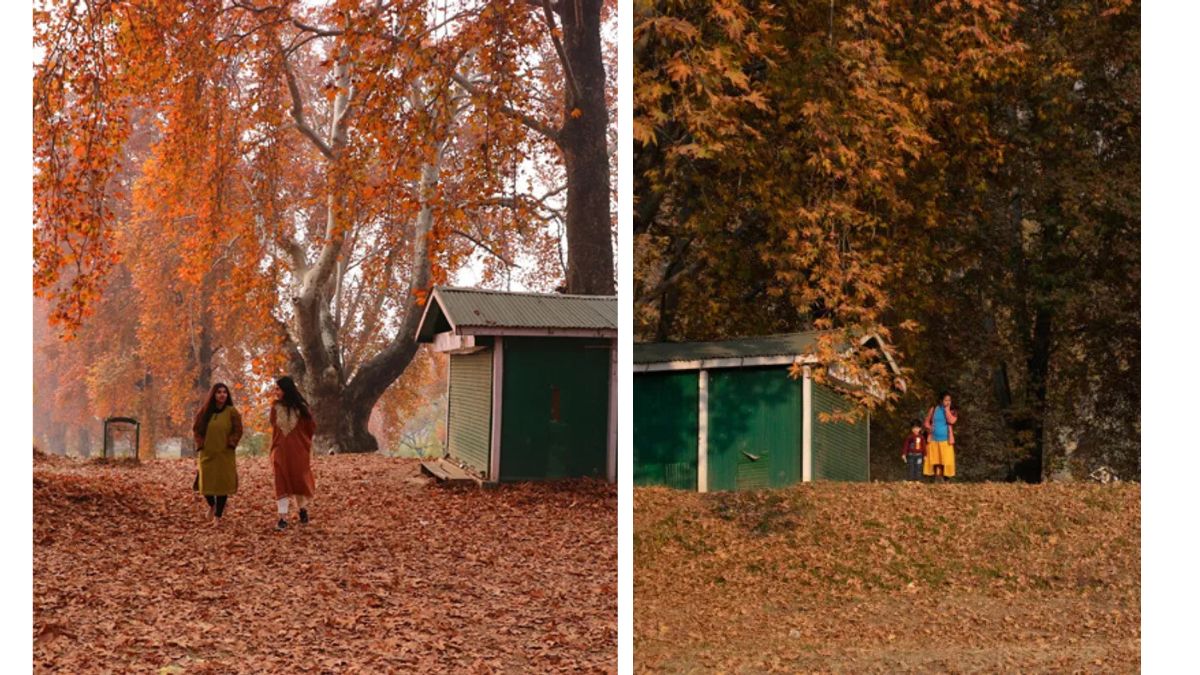
Autumn in Kashmir is nothing less than a magical transformation. As summer fades, the valley dons its most vibrant wardrobe—deep rusts, glowing golds, fiery reds. Between mid-September and November, Kashmir becomes a living canvas of chinar (maple) leaves, and every hill, garden, and lakeside acquires a poetic, golden hue. For many, this season captures the very essence of “heaven on earth.”
A season of colour and poetry
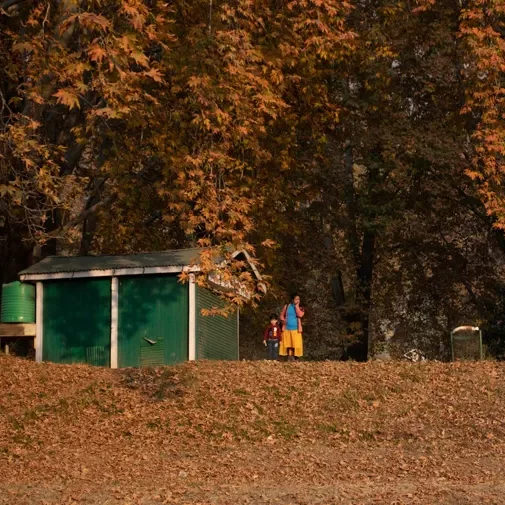
As the days shorten and the temperature cools, Kashmir begins its autumnal metamorphosis. The chinar trees—some of the most striking and ancient in the region—stand out in bold relief against the landscape. Their leaves, once green and lush, begin gradually turning shades of red, orange, yellow, and rust.
This isn’t just a visual change. The falling leaves settle over paths, lawns, gardens, and riverbanks, forming a natural carpet that crackles underfoot with every breeze and footstep. Far from silent, those leaves murmur: they sigh, swirl, and shimmer, echoing the coming winter as much as the retreating summer. There’s a tactile, almost musical quality to autumn in Kashmir.
The chinar: guardian of autumn
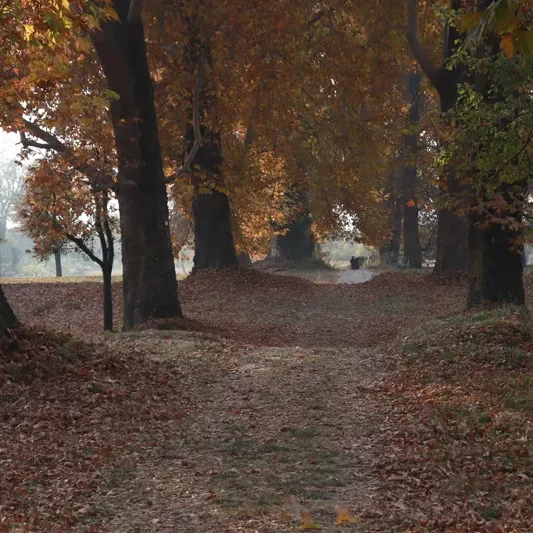
Chinar trees, also known as Kashmir maple, are everywhere in Srinagar—lining roads, filling gardens, shading houseboats, and standing sentinel in Mughal parks. Their presence is woven into the cultural and visual identity of the place.

When autumn arrives, these trees become more than botanical fixtures; they are storytellers. Their branches blaze with seasonal fire, turning gardens and waterways into scenes straight out of a painting or poem. The Mughal gardens—like Shalimar Bagh and Nishat Bagh—are especially spectacular at this time. Built centuries ago, these terraced landscapes take on a new dimension as chinar leaves cascade over stone walkways and terraces, mingling with water channels and framing the terraced gardens against the distant mountains.
Shalimar Bagh, originally created for royal walks and contemplative promenades, becomes even more enchanting when its avenues glow in warm autumnal light. Visitors stroll beneath the canopy of reddening leaves, the air alive with crisp fragrance and soft rustling sounds.
Nishat Bagh, with its elegant terraces flowing toward Dal Lake, offers another unforgettable autumn tableau. Here, the golden and red leaves contrast beautifully with the serene blue of the lake and the distant Zabarwan mountain range, resulting in a harmony of colour, texture, and atmosphere.
Beauty through the lens
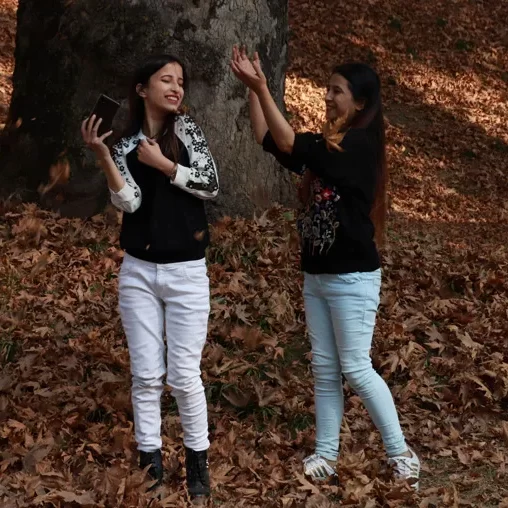
Photographers and travellers alike are drawn to Kashmir in autumn for its dramatic aesthetics. Images from this season often show chinar branches heavy with coloured foliage, a backdrop of snow-dusted peaks hinting at winter ahead, and riverbanks awash in leaf litter.

Yet, beyond the visuals, there is a sense of stillness and transition—nature preparing to rest. The maple leaves seem to have lives of their own: they flutter, drift down in spirals, and collect along walkways, staircases, and shores. Garden lovers and portrait-seekers flock to these muted, warm-toned settings because they provide a backdrop rich in mood, depth, and history.
The golden carpet underfoot, the rich red overhead, and the soft light make autumn in Kashmir not just beautiful, but almost cinematic. Every season has its charm, but autumn in Kashmir feels like nature’s final, grand show before the winter silence sets in.
A sensory journey
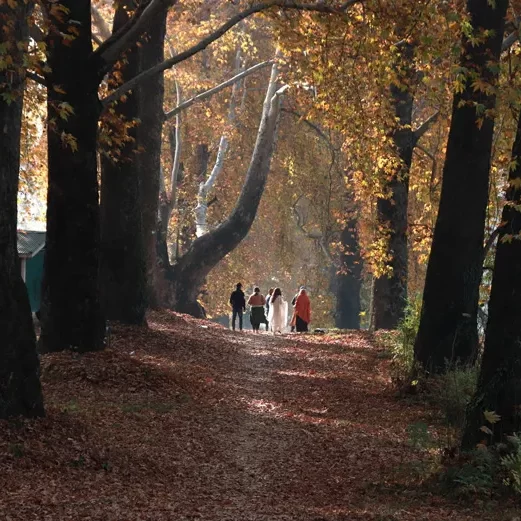
Walking through Srinagar in autumn is a sensory immersion. The scent of the earth, slightly damp from approaching cold, mingles with the dry musk of maple leaves. In early morning light, shimmers of fog hover over Dal Lake and the canals of Mughal gardens. The sound of falling leaves becomes part of the landscape: a quiet rustle that follows visitors along stone steps and pathways.
Houses near chinar groves are touched by this change too—golden and red leaves swirl over rooftops, porch steps, and gardens. Even waterways gather leaves: river currents carry reds and russets past boats and willow roots, reflecting the autumn sky in waves of colour.

Cultural resonance and symbolism
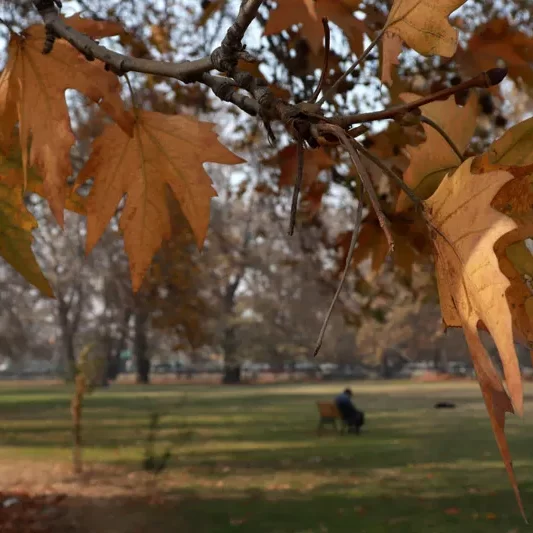
Autumn in Kashmir isn’t just a visual spectacle—it has deep cultural resonance. The chinar, in particular, is more than a tree. It has become a symbol of the Kashmiri spirit: enduring, rooted, majestic, changing yet steady. In poetry, lyrics, and folklore, the chinar leaf often represents nostalgia, transition, and the passage of time.
For locals and visitors alike, strolling under chinar-lined paths is more than a scenic activity—it’s a form of communion with the land. These trees have witnessed centuries of change. Their leaves, season after season, mark the passage of life: bright, fleeting, beautiful.
Photographers, writers, and travellers often say that autumn in Kashmir is “heaven on earth” not just for the landscapes, but because of the emotional tone it sets: vibrant yet melancholic, full of warmth yet heralding cold. It’s a reminder that beauty in Kashmir is not only in its tranquil lakes or snow-clad mountains, but in the delicate, transient moments in between.
The ephemeral magic of autumn
As November advances, the chinar leaves finally give in to gravity. Gardens that were bright and lively become quiet, covered in thousands of fallen leaves that twirl in wind gusts and settle in patterns along walkways. The magic lingers only briefly. Soon, bare branches will contrast with grey sky, and the valley will ready itself for winter’s stillness.

But for a few glorious weeks, everything—gardens, paths, waterways, mountain views—is bathed in warm colour. Tourists, locals, and artists come together to catch this fleeting spectacle. Boats linger on Dal Lake; cafés near shorelines crowd with people seeking the last golden hours. Photographers climb terraces; poets find inspiration in the rust-colour light.
The fading leaves and the cooling air invite reflection. Autumn is not just a touristic highlight—it’s a metaphor for change, for endings and beginnings. It gently teaches that even beauty is transient, and that time, like a falling leaf, must rest eventually.
Autumn in Kashmir: more than visuals
Beyond the photos, autumn in Kashmir holds personal meanings. For many, it’s a time to remember summers past, to anticipate winters ahead. The falling leaves are part of daily life: communities sweep pathways, artisans craft items from fallen branches, and locals adapt their routines to shorter daylight and cooler mornings.
Still, despite the chill in the air, autumn feels warm in spirit. It offers a moment of calm—the sense that nature, even in transition, is still generous. The grafted terraces of Mughal gardens seem to glow under the soft autumn light. The reflection of chinar trees in the calm waters of Dal Lake and other waterways enhances the sense of tranquility.

When autumn finally gives way to winter, the valley transforms again: the maple leaves disappear, the blue sky grows sharper, and snow arrives to reshape familiar landscapes. But the images of autumn—of golden paths, red branches, leaf-strewn gardens—linger in memory, a reminder of the fragile, fleeting beauty that characterises Kashmir.
Leave a Reply